5 Ways AI is quietly changing how we think about personal health
Most people don't think of themselves as early adopters of health technology. They're just people with a weird rash at 11 PM who don't want to bother their doctor, or someone waking up at 3 AM wondering if that chest tightness is anxiety or something worth worrying about. And yet, almost without realizing it, these same people have started turning to AI to figure out what their bodies are telling them.
That shift is more significant than it sounds.
One of the biggest reasons behind this rise in AI health searches is the way modern lifestyles have changed, with higher stress levels, poor sleep, screen-heavy workdays, and health symptoms that often build slowly before becoming visible problems.
Even one of the reviews published in PMC, roughly 60% of health outcomes are shaped by lifestyle and environmental factors, not genetics, which means the most important health data about you has never been collected in a clinic. It lives in your daily patterns, your stress, your sleep, your habits.
and AI is the first tool actually designed to reach that data.
Here's where it's quietly doing the most interesting work.
TOP 5 ways AI is contributing to understanding personal health better
1) Symptom checking has grown up, but most people still use it wrong
There's a version of AI health tools that deserves its bad reputation: the ones that send you into a spiral, where a mild headache becomes a death sentence. But that's a search engine problem, not an AI problem, and the distinction matters.
Proper AI symptom checkers don't just pattern-match your input against a list of conditions. They reason through it. They ask follow-up questions. They factor in how long something has been happening, what makes it better or worse, and whether your answer to the last question changes what the next question should be. That's a fundamentally different experience from typing symptoms into a search bar.
The real value isn't that they're more accurate than a doctor; they're not, and they don't claim to be. The value is that they exist before the doctor. They help people decide whether to wait and watch, book a same-day appointment, or go to the ER at midnight. That function, knowing what tier of care a symptom actually needs, is something most people genuinely struggle with.
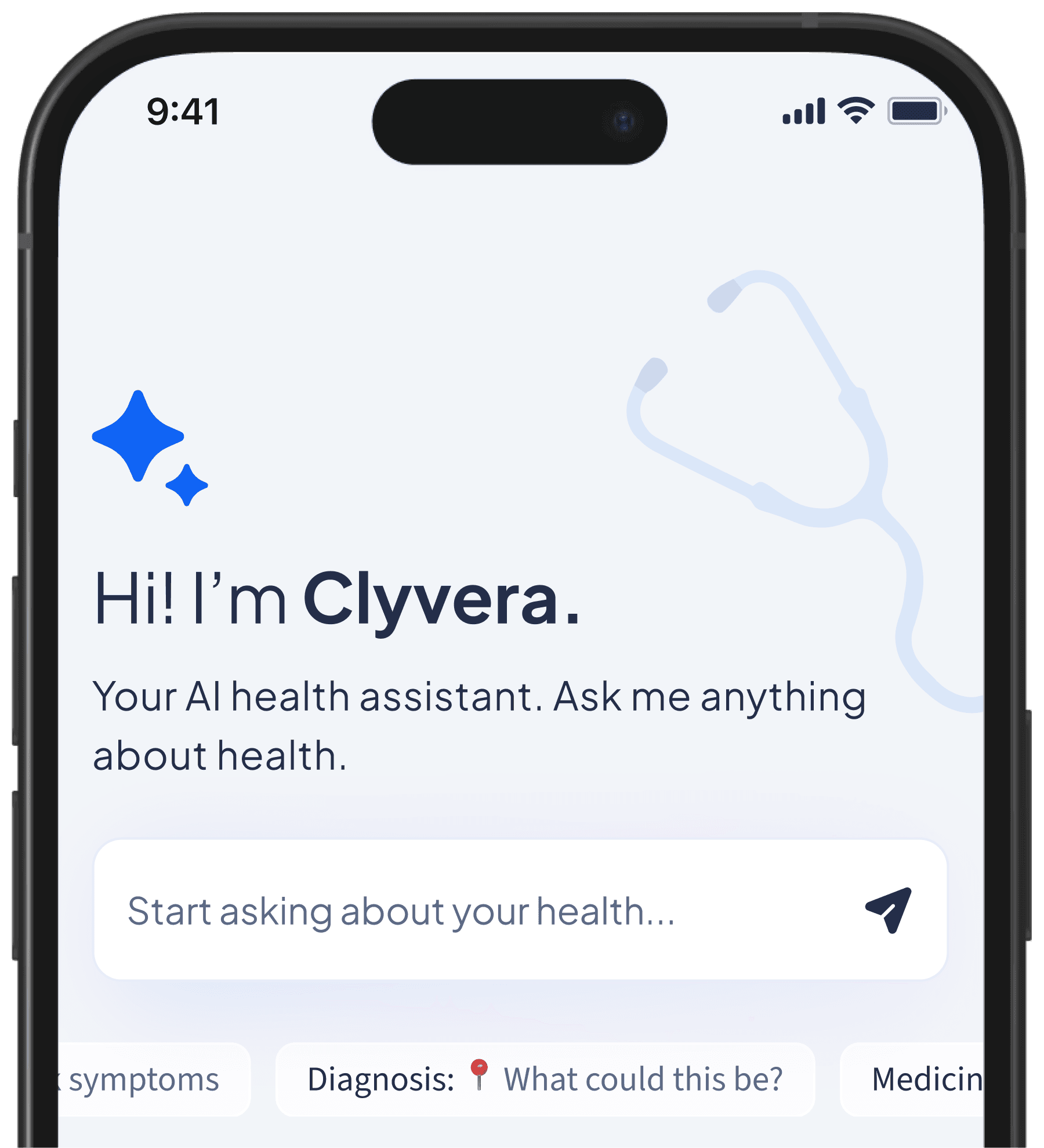
This is exactly where an app like Clyvera fits in. Not as a diagnostic substitute, but as that first intelligent layer between noticing something and knowing what to do about it.
2) Wearables are generating data most doctors have never seen
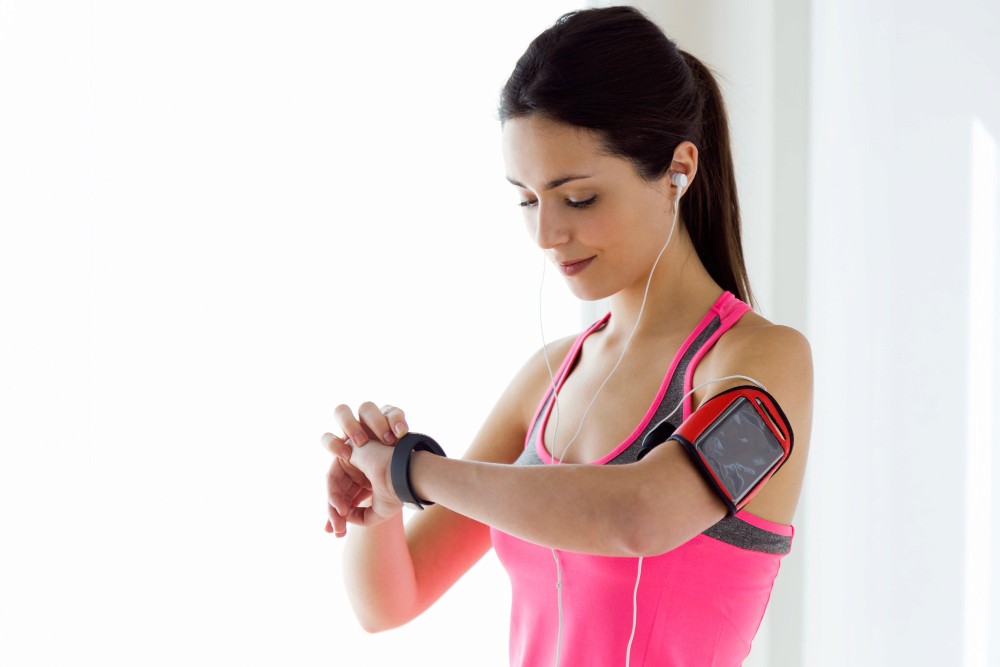
Here's something worth sitting with: your Apple Watch or Oura Ring now captures more continuous data about your body in a single week than in a week than most healthcare systems can during occasional appointments.
The question has never been whether this data is interesting. It clearly is. The question is whether anyone or anything is actually doing something useful with it.
That's where AI changes the equation.
For instance, Fitbit Premium's daily readiness scoring doesn't just count your steps; it weighs your overnight HRV, sleep stages, and resting heart rate against your recent history to tell you whether your body is primed to push or needs recovery. Oura's illness detection has been shown in academic research to flag physiological changes, notably temperature spikes and HRV drops, before users consciously notice symptoms.
What's genuinely novel here isn't the sensor hardware. It's that the analysis happens continuously and in context. A single high heart rate reading means nothing. A pattern of elevated resting heart rate for four consecutive nights, cross-referenced with declining sleep quality and increased respiratory rate, means something. AI connects those dots in a way a clinician reviewing quarterly bloodwork simply cannot.
3) Mental health support found its midnight market
Mental health care has a timing problem. The moments when people most need support, the 2 AM anxiety spiral, the post-work emotional crash, the slow-burning burnout that builds over weeks, are exactly the moments when professional support is unavailable.
AI is filling that gap, and with more clinical backing than most people realize. A 2025 study published in JAMA Network Open via PMC found that approximately 5.4 million US adolescents and young adults are already using generative AI specifically for mental health advice, and 92.7% of them found it at least somewhat helpful.
Many apps today aren't just offering generic positivity or chatbot affirmations. They're built on CBT frameworks, adapting their approach to what users actually describe and remembering what coping strategies have worked before.
One must not forget that none of these replaces therapy. But there's a massive population of people who will never book a therapist because of cost, stigma, geography, or simply not knowing where to start, who are quietly finding a foothold through these tools. That's not a compromise. That's a real access story.
4) Nutrition finally has a memory
Generic nutrition advice is a solved problem. Eat more vegetables. Eat less processed food. The problem is that everyone already knows this and still struggles, because knowing and applying to your actual life with your actual habits are completely different things.
What AI brings to nutrition isn't new information; it's personalized pattern recognition. Modern AI nutrition apps don't just log your meals; they learn that you reliably skip breakfast on busy mornings and overeat in the evenings, then adjusts its recommendations around that reality rather than an idealized meal plan you'll abandon
For instance, Noom's AI coach, "Welli," layers behavioral psychology on top of calorie tracking, addressing why certain eating patterns happen, not just flagging that they did.
This matters because behavior change is the actual problem in nutrition, not information. AI tools that adapt to your patterns instead of prescribing against them are operating at a different level of usefulness.
5) The shift from reactive to proactive is the real story
All four points above are symptoms of something bigger: a fundamental change in how personal health is structured in time. Traditional healthcare is almost entirely reactive. But AI is pushing in the opposite direction, building a layer of continuous attention that can surface patterns before they become problems.
For example, SkinVision uses AI trained on millions of dermatological images to analyze moles and flag changes worth reviewing with almost clinical accuracy in detecting suspicious lesions. These aren't futuristic promises; they're tools people are using right now, outside of any clinical setting, to make earlier decisions.
The deeper shift is philosophical. For most of human history, your body had to shout to get your attention. AI is building the infrastructure for it to whisper and for someone to actually be listening.
The Necessary Reality Check
None of this works if people treat AI health tools as definitive answers. The version of this technology that actually helps people is the one that knows its role, not to diagnose, not to replace clinical judgment, but to extend awareness, reduce friction, and give people a smarter starting point.
That's a genuinely useful thing. Most health problems don't start in hospitals; they start in the gap between "I noticed something" and "I did something about it." Closing that gap, even slightly, is where tools like Clyvera, Wysa, Oura, and their peers are making a real difference.
The quiet revolution in personal health isn't that AI is replacing doctors. It's that AI is finally making the space before the doctor as intelligent as the space inside the clinic.
Related Blogs