How do i know if my headache is actually a migraine? What are the signs?

When you are back from office and you suffer a headache again, with a doubt if its a normal one or a migraine. Perhaps it started as a dull ache around your forehead, but gradually the pain became stronger. Now the light feels too bright, ordinary sounds are irritating, and even looking at your laptop screen has become uncomfortable. You take a painkiller and try to get through the day, hoping it will settle.
But this keeps happening. Some days the pain is manageable, while on others you need to lie down in a quiet room and avoid almost everything around you. You may have started wondering whether these are ordinary headaches or something more.
One possibility is migraine. Despite what many people believe, a migraine is not simply a particularly bad headache. It is a neurological condition that can affect how you feel, see, think and function, sometimes even before the head pain begins.
Understanding the pattern of your symptoms can help you recognise when a headache might actually be a migraine and when it is worth speaking to a healthcare professional.
When Does a Headache Start Looking Like a Migraine?
Not every headache is a migraine, and the intensity of the pain alone does not tell you which one you are experiencing. A typical tension-type headache often feels like pressure or tightness around the forehead, temples or back of the head. It may feel as though something is squeezing your head, but you might still be able to continue with your daily activities.
A migraine can feel quite different. The pain is often moderate to severe, throbbing or pulsating, and may become worse when you walk, climb stairs or move around. It can affect one side of the head or sometimes both. Nausea, vomiting, and sensitivity to light and sound are also common. According to the World Health Organization's overview of migraine and other headache disorders, migraine attacks commonly last between four and 72 hours and can significantly affect everyday life.
One important distinction is that migraine symptoms do not look exactly the same in everyone. Some people experience intense head pain, while others notice nausea, visual disturbances or sensitivity to light as their most disruptive symptoms. This is why paying attention to the combination of symptoms matters more than judging a headache by its intensity alone.
It Isn't Always Just Pain on One Side of Your Head
You may have heard that migraines always affect one side of the head. While one-sided pain is common, it is not a requirement. Some people experience pain on both sides, around the forehead, behind the eyes or across the entire head.
The character of the pain can also vary. It may begin gradually, build into a throbbing sensation and become more uncomfortable with movement. For others, the headache may feel like persistent pressure accompanied by nausea, dizziness or an overwhelming sensitivity to their surroundings.
You might also find that everyday activities become unusually difficult. Working on a computer, travelling in a noisy vehicle, attending a meeting or even having a normal conversation can feel exhausting during an attack. If your headaches repeatedly interrupt your routine in this way, it is worth discussing the pattern with a doctor.
Your Migraine May Actually Begin Before the Headache
One of the lesser-known aspects of migraine is that the attack may begin hours or even a day or two before the head pain appears. This early stage is known as the prodrome.
During this phase, you may notice that you are unusually tired, yawning more often, feeling irritable or struggling to concentrate. Some people experience food cravings, increased thirst, mood changes or a stiff neck. These symptoms can be easy to dismiss because they do not immediately feel like a headache.
For example, you might wake up feeling unusually drained, spend the day craving certain foods and become more sensitive to your surroundings. By evening, the familiar headache begins. When this pattern repeats, the earlier changes may actually be useful clues that a migraine attack is developing.
Recognising these early signs can help you understand your own migraine pattern and discuss possible early treatment with a healthcare professional.
What Are Migraine Auras? Are They the Same as Warning Signs?
Some people experience a phase called an aura before or during a migraine. An aura is different from the general early warning symptoms described above. It involves temporary neurological symptoms, most commonly affecting vision, sensation or speech.
Visual changes are among the most recognised examples. You might see flashing lights, zigzag patterns, shimmering spots or areas of blurred vision. Others experience tingling or pins and needles in their hands, face or around their mouth. Some people temporarily find it difficult to speak clearly.
Aura symptoms usually develop gradually and are reversible. They commonly last between five and 60 minutes. Not everyone who experiences migraine has an aura, and some people can experience aura without a headache following it.
It is important not to assume that every sudden visual disturbance, episode of numbness or difficulty speaking is migraine aura. If these symptoms are new, sudden, unusually severe or different from your usual pattern, seek urgent medical assessment. Sudden weakness, facial drooping, difficulty speaking or loss of vision can also be signs of a stroke.
Why Do Some People Get Migraines While Others Just Get Headaches?
There is no single explanation for why one person experiences migraines while another mostly gets tension-type headaches. Migraine is a neurological condition involving changes in how the nervous system processes pain and other sensory signals. Genetics can also play a role, which means having a close family member with migraine may increase your likelihood of experiencing it.
Certain situations can trigger an attack in people who are already prone to migraine. Common examples include irregular sleep, stress, skipping meals, dehydration, hormonal fluctuations and changes in caffeine consumption. Bright lights, strong smells and some foods may also be triggers for certain individuals.
However, triggers are highly personal. Chocolate, for example, may be associated with an attack for one person but have no noticeable effect on another. It is also possible that a food craving is an early symptom of an approaching migraine rather than the cause of it.
Instead of avoiding a long list of foods or making unnecessary lifestyle changes, try to notice what happens before your headaches begin. Looking for repeated patterns over time is generally more useful than assuming that one particular activity or food is responsible.
Why Does a Migraine Leave You Exhausted Even After the Pain Disappears?
For some people, the end of the headache does not mean the end of the migraine experience. After the pain settles, they may still feel drained, mentally slow, dizzy or unusually sensitive. This recovery phase is commonly called the postdrome.
You might find it difficult to concentrate, feel physically exhausted or struggle to return to your normal routine. Some people describe the experience as feeling as though they have been through a particularly demanding day, even if they have spent most of it resting.
This phase can last for several hours and, in some cases, longer. It helps explain why migraine can affect productivity and daily life beyond the period when the head pain is most intense.
Can Hormonal Changes Be Behind Recurring Headaches?
Hormonal fluctuations can influence migraine patterns, particularly in people who experience attacks around their menstrual cycle. Some notice that headaches occur just before or during their period, while others experience changes during pregnancy, after childbirth or around menopause.
Menstrual migraine may be longer or more severe than attacks at other times of the month. However, not every headache around a period is necessarily a migraine, and hormonal changes are only one possible factor.
If you notice a recurring connection between your headaches and your menstrual cycle, record when they occur and how long they last. Sharing this information with a doctor can help identify the pattern and discuss suitable treatment options.
How Do Doctors Know Whether You Have a Migraine?
There is no single blood test that confirms migraine in every person. Diagnosis is usually based on your medical history, the pattern and characteristics of your headaches, and the symptoms that occur alongside them.
A doctor may ask when the headaches started, how frequently they happen, how long they last and whether you experience nausea, visual changes or sensitivity to light and sound. They may also ask about your sleep, medication use, family history and possible triggers. A physical and neurological examination may help rule out other causes.
Scans such as an MRI or CT are not routinely required for every person with a typical migraine pattern. However, a doctor may recommend further investigations if your symptoms are unusual, have changed significantly or suggest another underlying condition.
Keeping a headache diary can make this conversation more useful. Record the date, duration, location and intensity of the pain, other symptoms, medication taken and anything unusual that happened beforehand. The NHS guide to migraine symptoms, diagnosis and treatment also explains when to seek medical advice and what treatment options may be available.
What Can Help When You Experience Migraines?
The right approach depends on how frequently your migraines occur, how severe they are and how much they affect your daily routine. Treatment may include medicines to relieve an attack, medicines to reduce nausea or preventive treatment for people who experience frequent or particularly disruptive episodes.
Your doctor can help determine which options are appropriate for you. Avoid repeatedly taking painkillers without guidance, as frequent use of headache medication can itself contribute to medication-overuse headaches and make the problem harder to manage.
Some everyday habits may also help reduce the frequency of attacks. Maintaining regular sleep timings, eating meals at consistent times, staying hydrated and managing stress can make a difference for some people. If you identify a recurring trigger, you can discuss practical ways to manage it rather than making broad restrictions that may not be necessary.
During an attack, resting in a quiet, dark room may make symptoms more manageable. Some people also find that a cool cloth on the forehead and drinking fluids provide comfort.
When Should a Headache Not Be Treated as an Ordinary Migraine?
Recurring headaches deserve attention, particularly when they are becoming more frequent, more severe or harder to manage. If headaches are regularly affecting your work, sleep or everyday activities, speak to a healthcare professional rather than relying only on self-medication.
Certain symptoms require more urgent attention. A sudden, extremely painful headache, new weakness or numbness on one side of the body, difficulty speaking, confusion, seizures, sudden vision loss or a headache accompanied by a high fever and stiff neck should not be assumed to be migraine. Seek emergency medical care.
You should also seek medical advice if a migraine attack lasts longer than 72 hours, if aura symptoms continue for more than an hour, or if your usual headache pattern changes significantly. New or unusual symptoms are worth assessing, even if you have experienced migraines before.
Don't Just Count Your Headaches. Pay Attention to the Pattern.
A headache can be easy to dismiss, especially when it settles after a few hours or improves with medication. But when it keeps returning, interrupts your routine or comes with symptoms such as nausea, visual changes and sensitivity to light, it is worth looking beyond the pain itself.
Migraine is a complex condition, and recognising its pattern can be an important first step towards getting the right support. Keeping track of when symptoms occur, what they feel like and how they affect your day can give you and your doctor a clearer picture of what is happening.
You do not need to wait until a headache becomes unbearable to take it seriously.
Understand Your Symptoms Better with Clyvera
Sometimes the difficult part is not experiencing a symptom, but understanding what it might mean and knowing what information to share with a doctor.
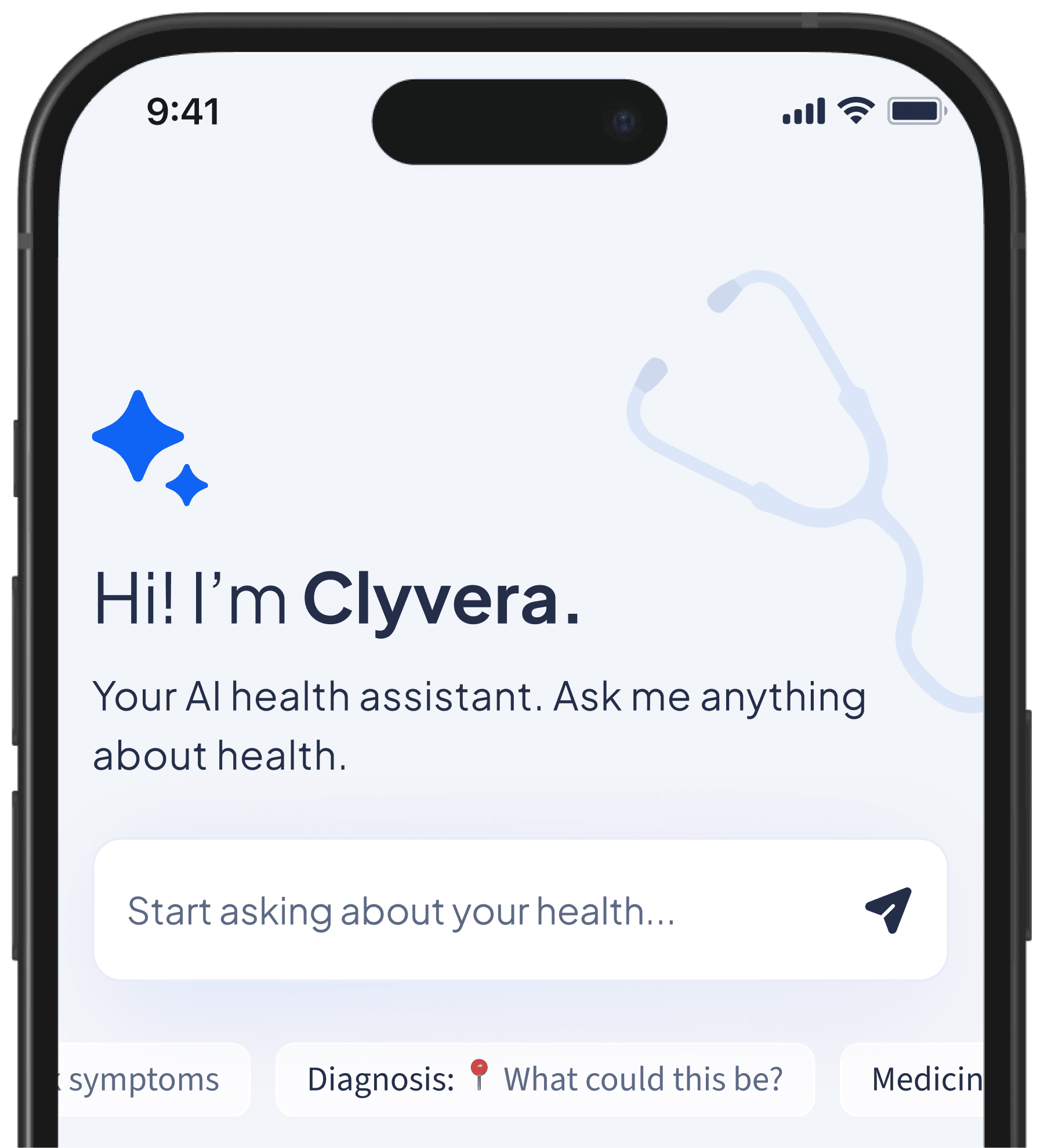
Clyvera helps you explore health questions, understand possible symptom patterns and organise your observations so you can have more informed conversations about your health. It is designed to support your understanding, not replace a medical diagnosis or professional care.
If recurring headaches have been leaving you with more questions than answers, explore Clyvera and take a more informed approach to understanding your health.
Related Blogs