Irregular periods, brain fog or sudden hot flashes? Understanding the signs of perimenopause

You notice your period is a few days late.
Then the next month, it arrives earlier than you expected. The bleeding seems heavier than usual, and a few weeks later you're suddenly standing in front of an open refrigerator because you feel uncomfortably hot even though everyone else seems fine.
Perhaps you've also started forgetting small things, struggling to concentrate during meetings or waking up several times during the night. You might wonder whether you're simply tired, stressed or going through one of those phases where your body feels different for no obvious reason.
For many women in their 40s, these changes can be part of perimenopause, the stage leading up to menopause when hormone levels begin to fluctuate and menstrual cycles gradually change.
Perimenopause is not an illness. It is a natural transition, but that doesn't mean the experience is always easy or predictable. Some women have very few symptoms, while others notice changes in their periods, sleep, mood, concentration, body temperature and energy that can affect everyday life. The NHS explains that perimenopause can affect people differently, and symptoms can change over time.
The confusing part is that there isn't one moment when perimenopause suddenly begins. Often, your body gives you several smaller clues before you realise that they may be connected.
Your period suddenly has a mind of its own
For many women, changes in their menstrual cycle are among the first noticeable signs.
A period that used to arrive with reasonable predictability may start coming earlier or later. The gap between periods can become shorter or longer, and the amount of bleeding may change as well. One month might feel relatively normal, while the next seems completely different.
That unpredictability happens because the ovaries gradually produce hormones differently during the menopausal transition. Ovulation may become less regular, which can affect the timing and pattern of your periods.
An irregular period does not automatically mean you're entering perimenopause, though. Pregnancy, stress, significant changes in weight, hormonal contraception, PCOS and thyroid problems can also affect menstrual cycles. If your usual pattern changes noticeably, it is worth considering the wider context rather than assuming that age is the explanation.
The NHS notes that changes in period pattern are often one of the first signs of perimenopause.
Then suddenly, you're far too warm
You could be sitting at your desk, having dinner or trying to fall asleep when a sudden wave of heat moves through your face, neck or upper body.
You may start sweating even though the room isn't particularly warm. Your face might feel flushed, and once the episode passes you may feel chilly again. At night, these episodes can wake you up and leave your clothes or bedding damp.
These are commonly called hot flashes or hot flushes, and they are among the most recognisable symptoms of the menopausal transition. They are thought to be related to changing hormone levels affecting the body's temperature regulation.
The experience isn't identical for everyone. Some women have occasional mild episodes, while others experience them frequently enough to interfere with sleep, work or social activities. The National Institute on Aging describes hot flashes and night sweats as common symptoms during the menopausal transition.
If you're suddenly experiencing frequent episodes of feeling extremely hot, especially when they're accompanied by other changes in your menstrual cycle, it's worth discussing them with a healthcare professional rather than simply assuming they're caused by the weather or stress.
Your brain feels a little slower than usual
You walk into a room and forget why you went there. You open your laptop to answer an email and suddenly can't remember what you were about to write.
Maybe you're finding it harder to concentrate during a meeting or you keep searching for words that normally come easily. You may even start wondering whether you're simply becoming forgetful.
Memory and concentration changes can occur during perimenopause. The NHS includes poor memory and difficulty concentrating among possible symptoms, and sleep disruption can make these experiences even more noticeable.
That doesn't mean every episode of forgetfulness is caused by changing hormones. Stress, anxiety, poor sleep, depression, medication and simply having too much on your mind can all affect concentration.
What makes the pattern worth noticing is when these changes are happening alongside other perimenopausal symptoms, particularly changes in your periods, hot flashes or disrupted sleep.
Your sleep isn't what it used to be
Sometimes the problem isn't falling asleep. It's staying asleep.
You may wake up at 2 a.m. feeling hot, then struggle to get comfortable again. On another night, you might wake without an obvious reason and find yourself lying awake for an hour.
Sleep problems are common during perimenopause and can be closely connected to night sweats and hot flashes. But the effects can go much further than simply feeling tired the next morning.
Poor sleep can make you more irritable, reduce your concentration and make everyday stress feel harder to manage. It can also make it difficult to work out which symptoms are being caused directly by hormonal changes and which are being amplified by exhaustion.
This is one reason perimenopause can sometimes feel like several unrelated problems appearing at the same time.
Your mood feels different too
Perhaps you've noticed that things that wouldn't normally bother you suddenly seem much more difficult.
You may feel more irritable, anxious, emotional or low than usual. Some days may feel completely normal, while on others your mood seems to shift without an obvious trigger.
Hormonal changes can play a role, but mood during midlife is rarely about hormones alone. Work, relationships, caring responsibilities, changes in sleep and other pressures can all overlap with the menopausal transition.
It's therefore important not to dismiss significant changes in mood as something you simply have to tolerate because you're getting older.
If low mood, anxiety or emotional changes are persistent or are beginning to affect your relationships or daily life, talking to a healthcare professional can help you understand what may be contributing.
Your body composition seems to be changing
You may notice that your clothes fit differently even though your routine hasn't changed dramatically.
Weight can become easier to gain during the menopausal transition, and some women notice more of it around the abdomen. At the same time, changes in muscle mass and how the body distributes fat can alter your shape even when the number on the scale hasn't changed very much.
This can be frustrating because it's easy to interpret every change as a sign that you've suddenly become less disciplined.
But body composition changes during the menopausal transition are more complicated than simply eating too much or exercising too little. Hormonal changes, ageing, sleep, activity levels and changes in muscle mass can all contribute.
Your body may start feeling different in other ways
Perimenopause doesn't stop at periods and hot flashes.
Some women experience headaches or migraines that become more frequent, while others notice joint and muscle aches, changes in their skin or hair, reduced sex drive or vaginal dryness. Urinary symptoms can also become more noticeable.
You don't need to experience all of these symptoms for perimenopause to be a possibility.
In fact, there is no universal perimenopause experience. Two women of the same age can go through the transition very differently, with one barely noticing a change and the other experiencing symptoms that affect sleep, work and relationships.
That variation is one reason it can be difficult to recognise what is happening at first.
Is it definitely perimenopause?
Not necessarily.
A missed or irregular period can happen for many reasons, and symptoms such as fatigue, anxiety, headaches and poor concentration have even more possible explanations.
This is particularly important if you're younger than expected for the menopausal transition. Menopause usually occurs between 45 and 55, although it can happen earlier. If menopause symptoms occur before 45, they may be considered early menopause, while menopause before 40 is described as premature menopause. The NHS recommends medical assessment for people under 45 who are experiencing possible menopause symptoms.
Your healthcare professional may consider your age, menstrual history, symptoms, medications, contraception and medical history before deciding whether further investigation is necessary.
Do you need a hormone test?
This is one of the confusing parts of perimenopause.
You might assume that a blood test can simply tell you whether you're in perimenopause. In reality, hormone levels can fluctuate considerably during the transition, so there isn't a single routine blood test that confirms perimenopause for most women.
For many people aged 45 or older, healthcare professionals can recognise perimenopause based on symptoms and changes in menstrual cycles rather than relying on hormone testing. The NHS notes that there is no routine test for perimenopause and menopause.
Blood tests may still be considered in certain situations, particularly when symptoms occur at a younger age or when another condition needs to be ruled out.
The important thing is that you don't have to diagnose yourself from a symptom list.
What about the word "menopause"?
People often use menopause and perimenopause as though they mean the same thing, but there is an important difference.
Perimenopause is the transition leading up to menopause, when periods and hormone levels can become unpredictable.
Menopause is reached when you have gone 12 consecutive months without a menstrual period, assuming you're not using hormonal contraception that affects your periods.
After that point, you are considered postmenopausal.
So if you're still having periods, even if they're becoming irregular, you may be experiencing the transition rather than having reached menopause itself. The NIA explains the difference between perimenopause and menopause.
When changes in bleeding deserve attention
Irregular periods can be part of perimenopause, but that doesn't mean every change in bleeding should simply be attributed to hormones.
Very heavy bleeding, bleeding between periods, bleeding after sex or periods that last longer than usual should be discussed with a healthcare professional. These symptoms can have causes unrelated to perimenopause.
There is also an important distinction after menopause. If you've gone 12 months without a period and then experience any vaginal bleeding or spotting, even if it happens only once, it should be checked.
That doesn't mean something serious is necessarily wrong. It means bleeding after menopause is different from the irregular bleeding that can occur during perimenopause and deserves proper assessment. The NHS specifically recommends medical evaluation for postmenopausal bleeding.
You don't have to simply put up with it
There is sometimes an assumption that perimenopause is something women should just endure until it eventually passes.
It doesn't have to be that way.
Lifestyle changes can help some symptoms, and there are medical treatments available when symptoms are significantly affecting quality of life. Depending on your circumstances, a healthcare professional may discuss options such as hormone replacement therapy, non-hormonal medicines or other approaches.
There isn't one treatment that is right for everyone. Your symptoms, medical history, family history and personal preferences all matter when deciding what to do.
Even something as simple as keeping your bedroom cooler, dressing in layers or identifying triggers for hot flashes can make certain symptoms easier to manage. The NHS provides practical guidance for managing hot flushes, sleep problems and mood changes.
Start by noticing what has changed
Perimenopause can be difficult to recognise because the symptoms don't necessarily arrive together.
One month your period is late. A few weeks later you're waking up sweating at night. Then you notice you're struggling to concentrate at work, and eventually you start wondering why you feel more tired and irritable than you used to.
Looking at each symptom separately can make the whole thing feel confusing.
Looking at the pattern can make it easier to understand.
Keeping track of your periods, sleep, hot flashes, mood, energy and other changes can give you a much clearer picture of what's happening over several weeks or months. It can also give you something concrete to discuss with your healthcare professional instead of trying to remember everything during an appointment.
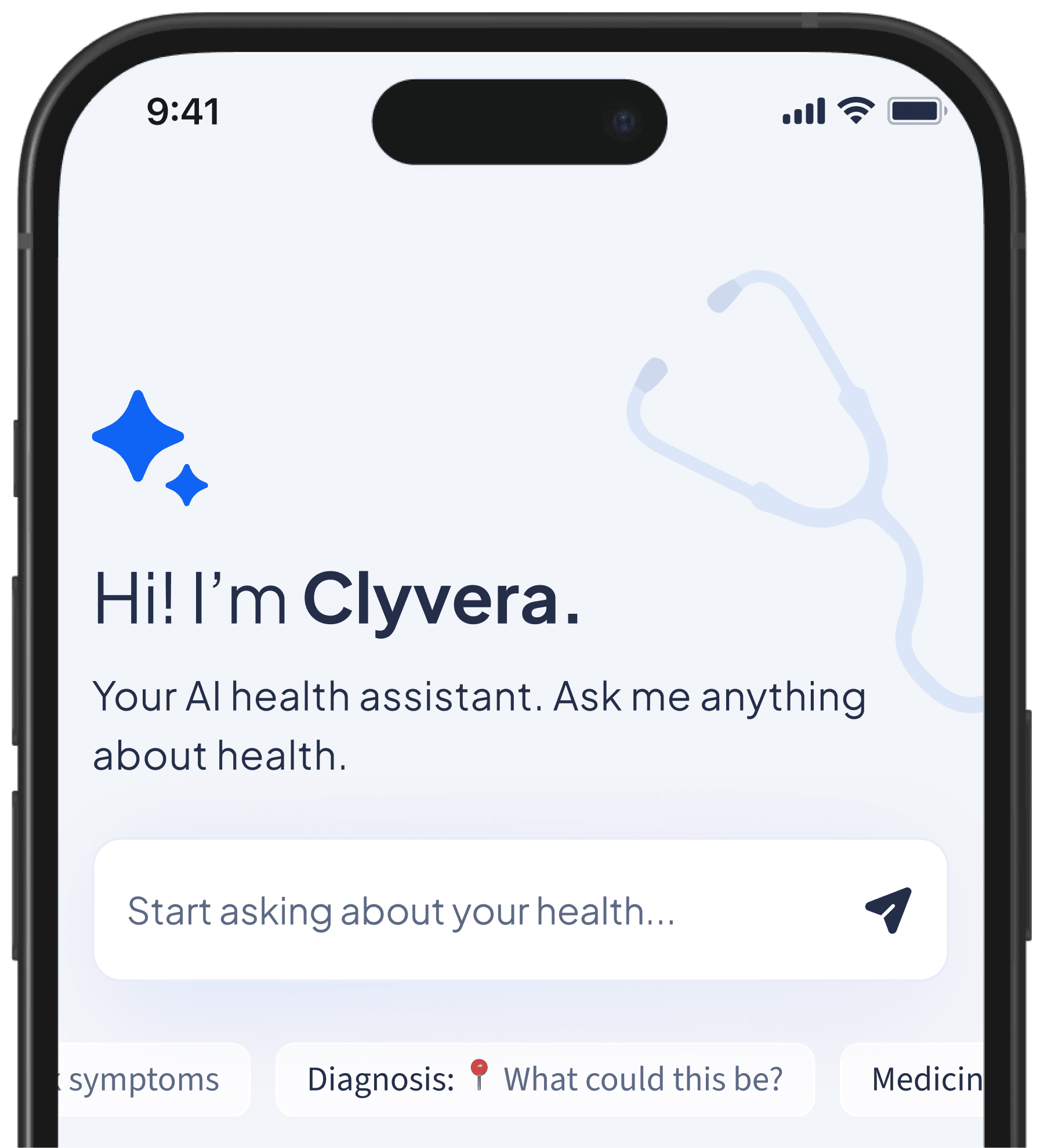
Clyvera can help you organise symptoms and health information over time, so you can capture these changes as they happen and better understand how different symptoms may be appearing together.
The goal isn't to label every change as perimenopause.
It's to recognise when your usual pattern has changed, understand what may be behind it and know when it's worth having a proper conversation with a healthcare professional.
Related Blogs