Sleeping enough but still exhausted? Understanding why you may not be getting restorative sleep

You went to bed at a reasonable time. You slept for seven or eight hours. You may even have avoided your phone before bed. Yet when morning comes, you feel as though you barely slept at all.
For some people, this happens occasionally after a stressful week or a late night. But when waking up tired becomes the norm, it is worth looking beyond how many hours you spend in bed. Sometimes the problem is not the amount of sleep you are getting, but whether your sleep is being repeatedly interrupted without you fully realising it.
One possible explanation is sleep apnoea, a condition in which breathing repeatedly stops and starts during sleep. The most common form, obstructive sleep apnoea, happens when the upper airway becomes narrowed or blocked while you are asleep.
When eight hours of sleep still don't feel like eight hours
One of the confusing things about sleep apnoea is that you may not remember waking up.
Your breathing can become restricted, your oxygen levels can change, and your brain can briefly rouse you enough to reopen the airway before you fall asleep again. This can happen repeatedly through the night, disrupting normal sleep even if you appear to be asleep for most of it.
That can leave you waking up feeling unrefreshed rather than rested. During the day, you might notice persistent tiredness, difficulty concentrating, irritability or a headache when you wake up.
This is also why simply telling yourself to “sleep more” does not necessarily solve the problem.
The clue may actually come from someone sleeping beside you
Sometimes the person with sleep apnoea is not the first person to notice something unusual.
A partner or family member may mention that you snore loudly, suddenly go quiet while sleeping, or make gasping, snorting or choking sounds during the night. You may not remember any of this the next morning.
Loud snoring by itself does not automatically mean you have sleep apnoea. Snoring is common and can have several causes. But when it happens alongside breathing pauses, gasping during sleep or significant daytime sleepiness, it becomes something worth discussing with a healthcare professional.
It isn't always about snoring
The popular image of sleep apnoea is someone who snores loudly throughout the night. That can make the condition easier to overlook in people whose symptoms look different.
You might mainly notice that you are exhausted during the day, struggling to focus at work, waking with headaches or experiencing repeated disturbed sleep. Some people may also notice mood changes or feel unusually sleepy during ordinary daytime activities.
Recent research presented in 2026 has also highlighted that women with obstructive sleep apnoea can report substantial fatigue, sleep disturbance and cognitive difficulties, even when objective measures of disease severity are similar to those seen in men.
So if the only question you are asking yourself is, “Do I snore?”, you may be missing some of the bigger picture.
Why can sleep become so fragmented?
In obstructive sleep apnoea, the muscles and tissues around the upper airway relax during sleep. If the airway becomes too narrow or blocked, airflow is interrupted. The brain then triggers a response that helps restore breathing.
You may not wake fully, but these repeated interruptions can prevent your sleep from progressing normally through the night.
Several factors can increase the likelihood of sleep apnoea, including excess weight, getting older, having a family history of the condition, drinking alcohol, smoking and certain physical features that affect the airway. However, sleep apnoea can affect different people for different reasons, so it should not be reduced to a single risk factor.
What if you are just tired?
This is where things can get confusing.
Fatigue is one of the most nonspecific health symptoms there is. Poor sleep, stress, anaemia, thyroid problems, diabetes, nutritional deficiencies, medications and many other conditions can leave you feeling exhausted. The NHS specifically notes that different patterns of tiredness can point towards very different underlying causes.
That is why feeling tired after a few bad nights does not mean you have sleep apnoea.
The more useful question is whether there is a persistent pattern. Are you regularly waking unrefreshed despite apparently getting enough sleep? Has someone noticed loud snoring or pauses in your breathing? Are you experiencing significant daytime sleepiness, morning headaches or difficulty concentrating?
When several of these pieces start appearing together, it is worth having the pattern assessed rather than assuming you simply need more sleep.
How is sleep apnoea diagnosed?
You cannot reliably diagnose sleep apnoea based on symptoms alone.
If a healthcare professional thinks you may have the condition, you may be referred to a sleep clinic for an assessment. Testing can monitor things such as your breathing and heartbeat while you sleep, and in many cases this can be done overnight at home.
The important part is that persistent symptoms should lead to proper evaluation rather than self-diagnosis based on a checklist found online.
And if sleep apnoea is diagnosed, there are established treatments. Depending on the individual situation, these can include lifestyle measures, devices such as CPAP, dental appliances and other treatments.
Your morning may be giving you useful information
Sometimes the most useful health clue is not one dramatic symptom. It is a pattern that keeps repeating.
Maybe you wake with a dry mouth and headache. Maybe your partner keeps telling you that your snoring is getting louder. Maybe you have started relying on several cups of coffee just to get through the afternoon. Maybe you are sleeping what looks like a normal number of hours but still feel mentally foggy every morning.
None of these signs proves that you have sleep apnoea. But recording when they happen, how frequently they occur and what else is happening around them can make it easier to explain the problem when you speak with a healthcare professional.
Start paying attention to the pattern
Sleep is something most of us think about in terms of hours. But your body experiences sleep as a process, and the quality and continuity of that process matter too.
If you are consistently sleeping enough but never seem to wake feeling rested, it may be worth asking a different question: what is happening while I am asleep?
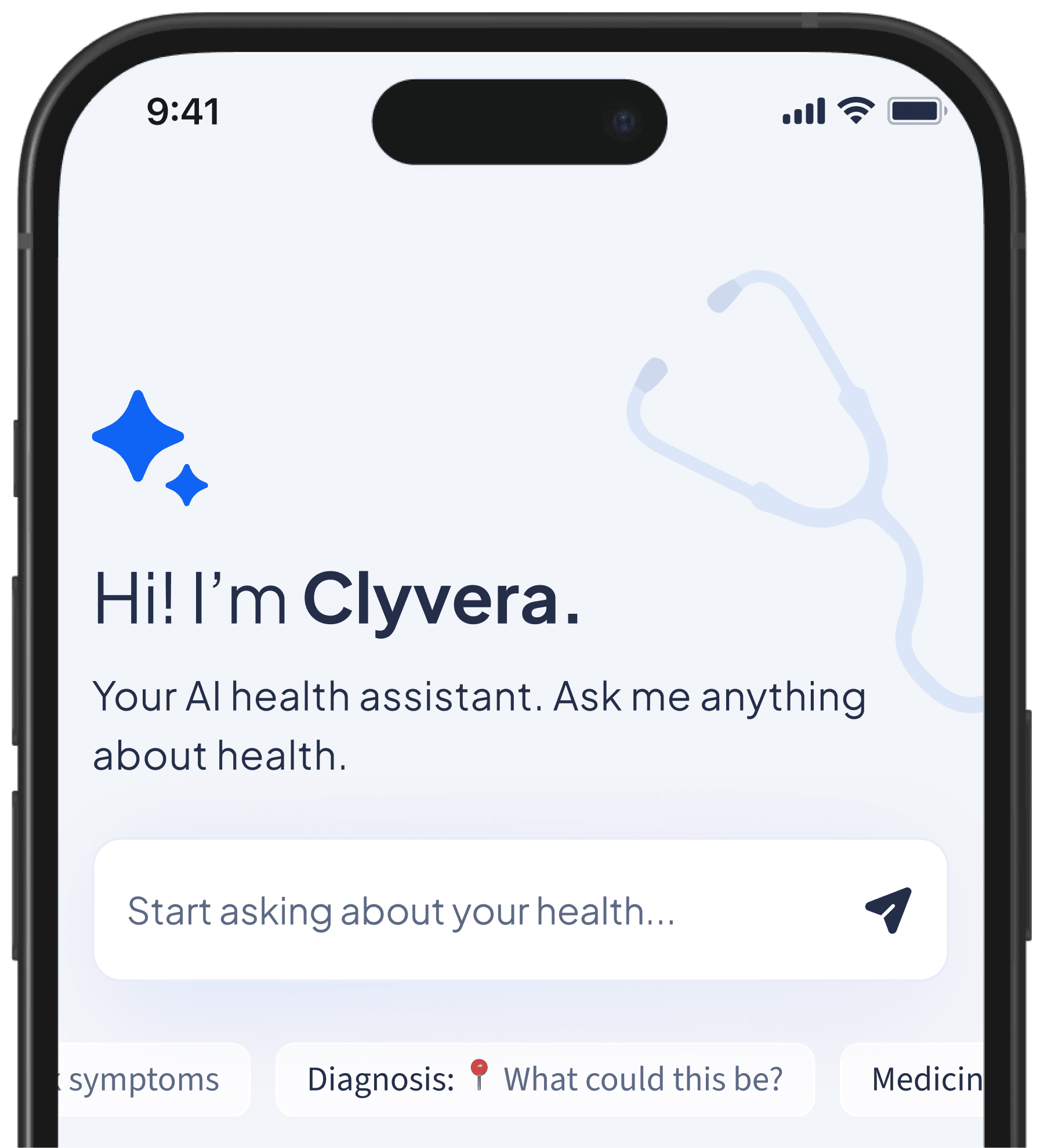
Clyvera can help you keep track of recurring symptoms, sleep patterns and changes over time, giving you a clearer record of what you have been experiencing. It is not a diagnosis or a replacement for medical care, but it can help you organise the information you want to discuss with a healthcare professional.
Related Blogs