Why does my body feel sick when I’m stressed? The mind-body connection explained.

You've got a big presentation tomorrow. Suddenly, your stomach is doing flips, your head is pounding, and you feel like you might throw up even though you haven't eaten anything bad. Sound familiar?
Here's the thing: your body isn't betraying you. It's actually doing exactly what it was built to do. The connection between your mind and body is far deeper than most people realize and once you understand it, a lot of those random symptoms start making total sense.
In the APA’s Stress in America 2025 findings, 80% of adults experiencing high loneliness also reported a chronic illness. The report also found that 62% of adults identified societal division as a major stressor, with many experiencing physical symptoms like fatigue and headaches.
Proving how stress can show up in physical illness too.
What's actually happening inside you when you're stressed?
The moment you feel stressed, whether it's a work deadline, a tough conversation, or even just a scary thought, your brain sends out an alarm signal. Your body then kicks into what's called the fight-or-flight response.
Think of it like your body hitting a giant red emergency button.
Your stress hormones, mainly cortisol and adrenaline, flood your system. Your heart beats faster, your breathing speeds up, your muscles tighten, and your blood pressure rises. All of this is your body saying, "Get ready. Something dangerous might be happening."
But the problem is your body reacts the same way to a work email as it would to an actual tiger. It doesn't know the difference.
Why does stress make you feel physically sick?
Here's where the mind-body connection really shows itself. When your stress response kicks in, it doesn't just affect your thoughts; it affects nearly every system in your body.
Your stomach goes haywire
Ever felt nauseous before something stressful? That's not just nerves, that's the gut-brain connection at work.
Your gut and brain are directly linked through a network of nerves. When your brain is stressed, it sends signals down to your digestive system, which can cause nausea, stomach cramps, bloating, diarrhea, or constipation. Your gut literally reacts to your emotions, not just to bad food. This is why stress-related nausea is so real and so common, and it's not "all in your head."
Your head starts pounding
Stress headaches and migraines are extremely common. When you're stressed, your muscles tense up, especially in your neck, shoulders, and scalp. That muscle tension leads directly to that throbbing headache that won't quit. For people who already get migraines, stress is one of the biggest known triggers.
You can't sleep, or you can't wake up
Chronic stress and sleep problems go hand in hand. Stress keeps your nervous system on high alert, making it hard to fall asleep or stay asleep. And when you're running on poor sleep, you feel foggy, sick, and worn down, which makes stress even worse. It's a brutal cycle.
You keep getting sick
This one surprises a lot of people. Stress weakens your immune system. When cortisol stays elevated for too long, it starts interfering with your body's ability to fight off germs. Your immune system gets confused, your defenses drop, and suddenly you're catching every cold that goes around. If you notice you always get sick right after a stressful period, that's exactly why.
Acute stress vs. Chronic stress, they're not the same
Here's an important distinction: short-term stress isn't always bad. A little stress before a race or an interview can actually sharpen your focus and push you to perform better. Your body handles brief stress well, it kicks in, does its thing, and then calms back down.
The real damage comes from chronic stress. The kind that never really goes away. The ongoing pressure of a difficult job, financial worries, relationship problems, or constantly feeling overwhelmed. When your body stays in fight-or-flight mode for weeks or months, the consequences add up fast.
Over time, long-term stress symptoms can contribute to serious issues like high blood pressure, heart problems, a weakened immune system, digestive disorders, and even depression or anxiety.
The Gut-Brain Connection: Your second brain
Your gut is sometimes called the "second brain," and there's a real reason for that. It has its own nervous system (the enteric nervous system) with hundreds of millions of nerve cells. It communicates constantly with your actual brain.
When you're anxious or stressed, your brain tells your gut. And when your gut is unhappy, it tells your brain back. This two-way communication is why stress and digestive health are so deeply linked. Some people feel it as nausea, others as stomach pain, and others as that "unsettled" feeling that won't go away.
How do you know if your sickness is from stress?
Not every headache or stomachache is stress-related, obviously. But some signs point to psychosomatic symptoms( physical symptoms driven by emotional or mental stress)-
Your symptoms flare up during or right after stressful situations
Doctors haven't found a clear physical cause
The symptoms come and go depending on your mood or circumstances
You feel fine on vacation or rest days, but awful during work weeks
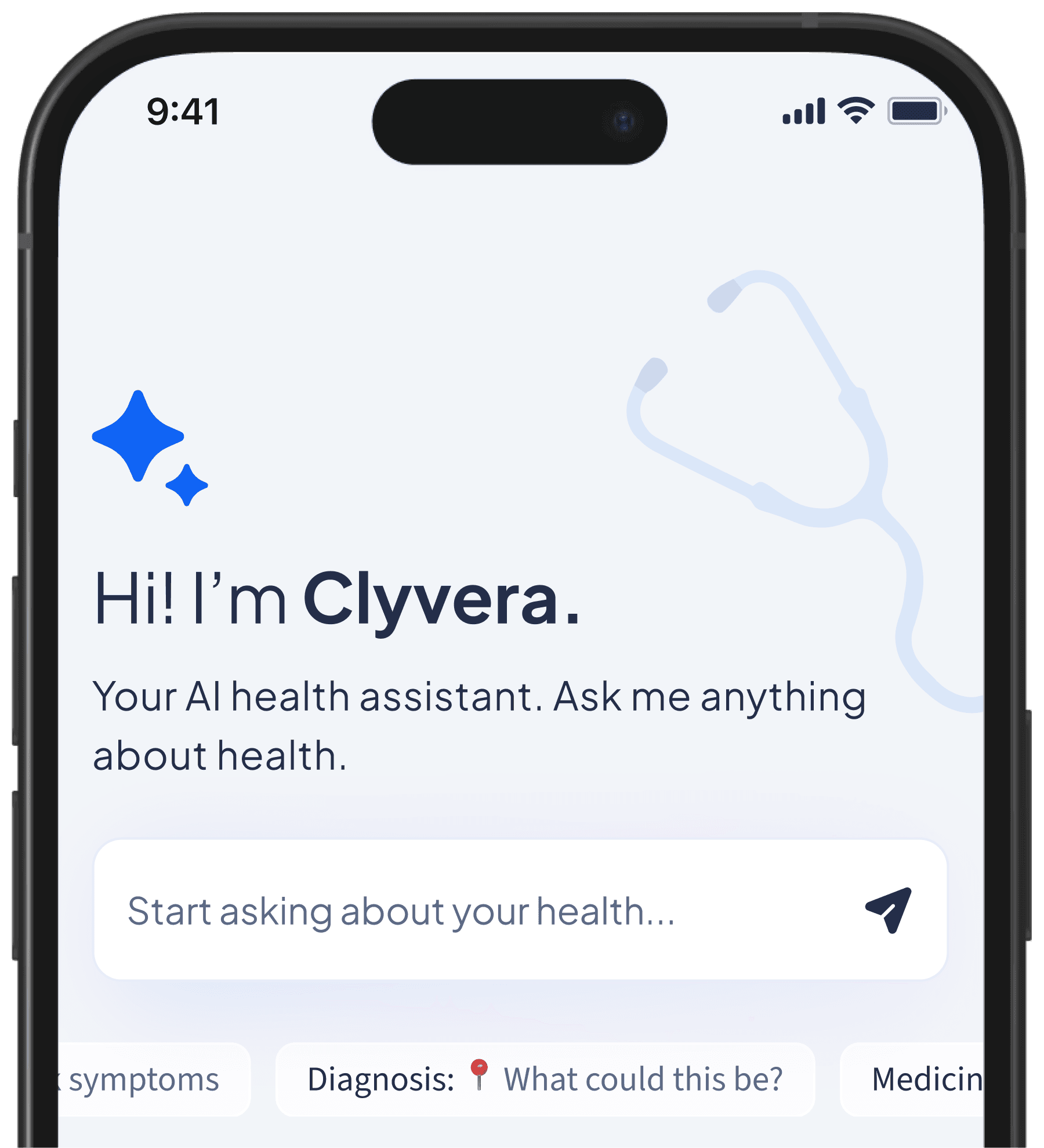
Still unsure what your body is trying to tell you? This is exactly where a symptom checker app helps. Clyvera lets you log what you're physically feeling and helps connect the dots, whether it's stress, anxiety, or something that genuinely needs a doctor's eye. Instead of spiraling on Google at 2am, you get calm, structured clarity. It's a solid first step before walking into any medical appointment.
So how can you actually deal with persistent stress?
To deal with persistent stress, you can definitely try these natural ways for relief-
You can't eliminate stress from your life, but you can change how your body responds to it. Here are some things that genuinely help:
A 10-minute walk lowers cortisol. Exercise is one of the most effective natural stress relief tools you have.
Deep, slow breathing signals your nervous system to calm down. Try inhaling for 4 counts, holding for 4, and exhaling for 4.
A consistent bedtime routine makes a huge difference in how your body handles stress the next day.
Stress thrives in silence. A friend, a therapist, or even a trusted family member can help you process what you're carrying.
The bottom line
Your body and mind are not two separate things; they're completely connected. When you're stressed, your body feels it. The nausea, the headaches, the tight chest, the exhaustion, none of it is made up. It's your body's very real, very physical response to what's happening in your mind.
The good news? Once you understand the stress and physical health link, you stop fighting your symptoms and start addressing the actual cause. And if you're not sure where to start, checking in with a tool like Clyvera is a simple, judgment-free first step because understanding what your body is telling you is always better than guessing. It can help you to know what you are feeling and help you to be better prepared in advance.
Your stress is real. Your body's reaction is real. And so is your ability to feel better.
Related Blogs