Bloated after every meal? Here’s what could be going on

You finish a meal and, not long after, your stomach feels tight, heavy or unusually full.
Maybe your jeans suddenly feel uncomfortable. Maybe there’s pressure in your abdomen, more gas than usual, or you simply feel like your stomach has expanded. Once in a while, this is usually nothing unusual. Bloating is common, especially during or after meals.
But when it starts happening after almost everything you eat, it’s reasonable to wonder: Is it something I’m eating, or is my body trying to tell me something?
The answer isn’t always straightforward. Bloating is a symptom, not a diagnosis, and several different things can produce the same uncomfortable feeling.
Understanding when it happens and what happens with it can provide useful clues.
First, what exactly is bloating?
According to the National Institute of Diabetes and Digestive and Kidney Diseases (NIDDK), bloating is the sensation of fullness or swelling in your abdomen.
Interestingly, feeling bloated doesn't necessarily mean your stomach has physically become larger. When your abdomen visibly expands, healthcare professionals generally describe this as abdominal distension.
The two can happen together, but not always.
Gas is one of the most common reasons people experience bloating. Your digestive system naturally contains gas, produced partly when bacteria in your large intestine break down carbohydrates that weren't fully digested earlier in the digestive tract.
So some bloating after eating can simply be part of digestion.
The more useful question is why it keeps happening.
Sometimes, it starts with how you eat
Before blaming a particular food, consider the meal itself.
Eating quickly can cause you to swallow more air. Fizzy drinks introduce additional gas into the digestive system. Large meals can also leave you feeling uncomfortably full.
The NIDDK's guidance for reducing digestive gas recommends measures such as eating more slowly and reducing behaviours that cause you to swallow additional air.
This means the same meal can sometimes feel very different depending on how quickly you ate, how much you ate and what you drank with it.
If your bloating is occasional and closely follows large or hurried meals, small changes may make a difference.
Try slowing down while eating, chewing thoroughly, reducing carbonated drinks and noticing whether smaller meals leave you more comfortable.
But what if you're already doing these things and the bloating keeps returning?
Your “healthy” lunch could still be making you bloated
This is where bloating becomes confusing.
Foods don't have to be unhealthy to produce gas. Certain carbohydrates aren't completely digested in the stomach and small intestine. When they reach the large intestine, gut bacteria break them down, producing gas in the process.
According to the NIDDK's guidance on diet and digestive gas, foods that can contribute to gas in some people include certain fruits, cruciferous vegetables, beans and lentils, dairy products and whole grains.
That doesn't automatically mean you should remove these foods from your diet. Instead, pay attention to patterns.
Does bloating consistently appear after milk or ice cream? After a meal rich in beans or lentils? After particular fruits? Or does it happen regardless of what you eat?
Repeated patterns can be more informative than blaming the last thing on your plate.
What if dairy is the pattern?
Suppose breakfast with eggs and toast feels fine.
But a latte leaves you bloated.
Ice cream does the same.
And meals containing a lot of milk or cream seem to trigger gas, discomfort or diarrhoea.
That pattern could be worth discussing with a healthcare professional because lactose intolerance can cause bloating, gas, diarrhoea, nausea and abdominal pain after consuming foods or drinks containing lactose.
Food intolerance is different from a food allergy, and you shouldn't assume you have one based on bloating alone.
This is why context matters.
One isolated symptom rarely tells the whole story.
Constipation can make your stomach feel fuller too
Bloating isn't always about something you've just eaten.
Sometimes the problem is what isn't moving through your digestive system efficiently.
Constipation is one of the digestive problems that can contribute to bloating, according to the NHS guidance on bloating.
If you're bloated and also having fewer bowel movements than usual, passing hard stools or struggling to empty your bowels, those symptoms may be connected.
In this situation, simply cutting random foods from your diet may miss the real issue.
Again, the surrounding symptoms matter.
When bloating keeps returning with pain or changes in bowel habits
Persistent bloating can sometimes occur alongside digestive conditions such as irritable bowel syndrome (IBS).
IBS commonly involves abdominal pain alongside changes in bowel movements, while people with IBS may also experience increased sensitivity to normal amounts of gas or stool. You can read more about the condition in the NIDDK's overview of IBS symptoms and causes.
Other digestive conditions, including coeliac disease and certain problems digesting carbohydrates, can also contribute to bloating.
This doesn't mean persistent bloating automatically indicates a digestive disorder.
It means that frequency, duration and accompanying symptoms help determine whether something deserves further investigation.
For some women, the pattern may be hormonal
If your bloating appears predictably around your menstrual cycle, hormones may be playing a role.
Bloating around the time of a period is common, and hormonal fluctuations can influence fluid retention and digestive function.
This is another reason tracking when bloating occurs can sometimes be more useful than focusing only on what you ate.
A symptom that appears randomly tells one story. A symptom that returns at roughly the same point every month may tell another.
Try looking for the pattern, not just the trigger
When people feel bloated, the first reaction is often:
“What food should I stop eating?”
A better first question may be:
“What keeps happening when I feel this way?”
For a week or two, consider noting:
What you ate
Was there dairy, a fizzy drink, a particularly large meal or something you don't normally eat?
How quickly you ate
Was it a rushed lunch at your desk or a slower meal?
When the bloating started
Immediately? Thirty minutes later? Several hours later?
What else happened
Gas? Pain? Diarrhoea? Constipation? Nausea? Heartburn?
How long it lasted
Did it disappear quickly or remain for most of the day?
Whether it keeps repeating
Occasional bloating and a predictable recurring pattern aren't necessarily the same thing.
Keeping this kind of record isn't unusual in clinical care either. The NIDDK notes that doctors may ask patients to keep a food and symptom diary when investigating recurring gas symptoms.
Over time, those details can turn “I keep getting bloated” into a much more useful picture of what's actually happening.
When should bloating be checked by a doctor?
Most occasional bloating isn't a sign of something serious.
But persistent or changing symptoms shouldn't simply be ignored.
Consider speaking with a healthcare professional if you're frequently bloated, your bloating doesn't go away, dietary changes aren't helping, or the pattern has noticeably changed.
According to current NHS guidance on when to seek medical help for bloating, symptoms that warrant medical attention can include persistent bloating, unexplained weight loss or blood in your stool. More urgent assessment may be appropriate when bloating occurs with symptoms such as vomiting, significant abdominal pain, fever or abdominal swelling.
The important distinction isn't simply “bloating versus no bloating.”
It's whether the symptom is occasional and explainable, or persistent, changing and accompanied by other warning signs.
Your symptoms make more sense in context
A search for “bloating after eating” can produce dozens of possible explanations.
But your health isn't a list of search results. Maybe the bloating started recently. Maybe you've also been constipated. Maybe it only happens after particular foods. Maybe you've noticed abdominal pain.
Or perhaps you've been experiencing several seemingly unrelated symptoms over the past few weeks.
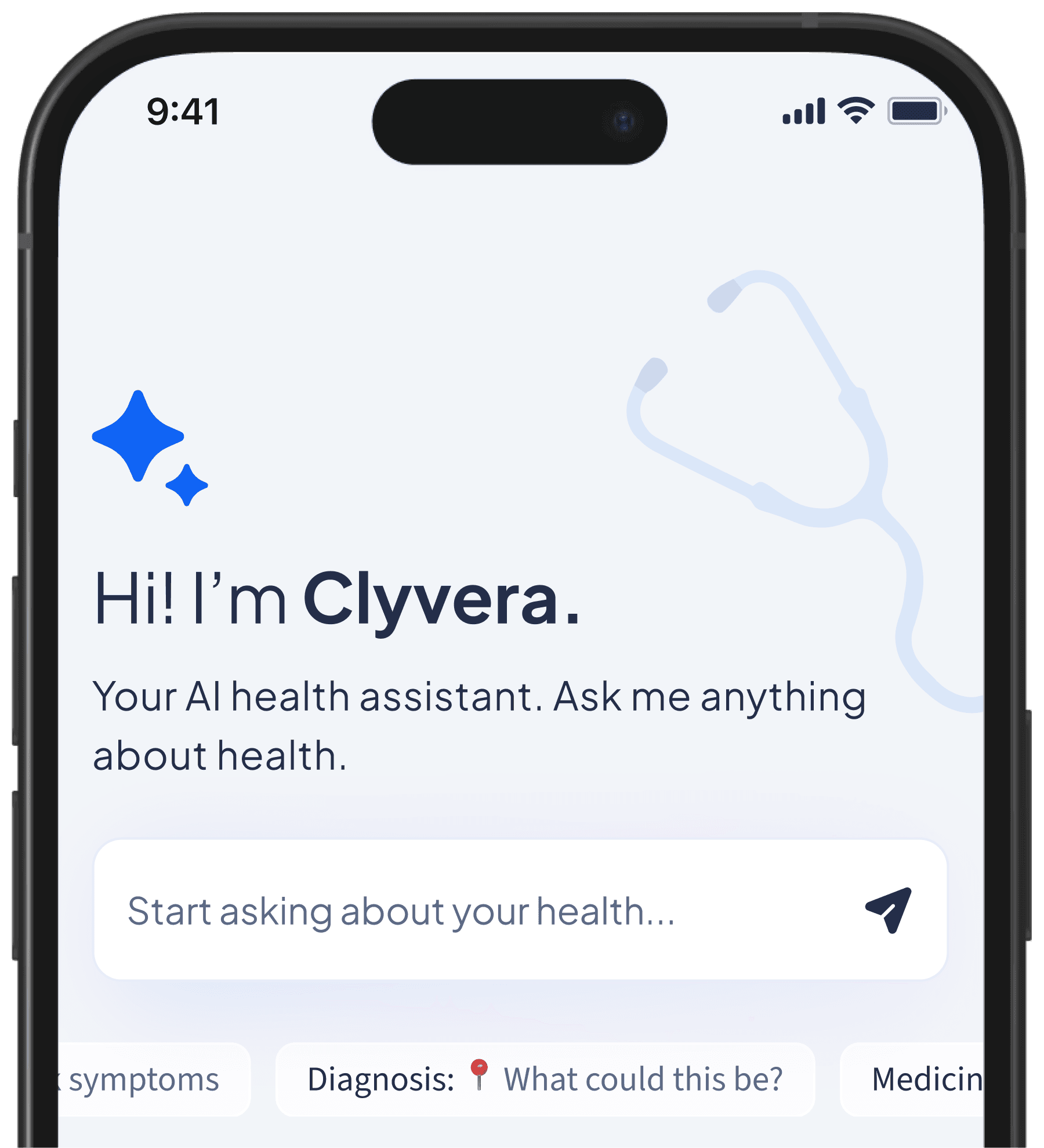
Each additional piece of context can change what may be relevant. This is where Clyvera can help you make better sense of what you're experiencing.
Instead of looking at one symptom in isolation, Clyvera helps you capture your symptoms and relevant health context, explore possible explanations and understand when seeking professional medical advice may be appropriate.
It isn't about diagnosing yourself. It's about going from:
“Why does this keep happening to me?”
to
“I understand the pattern better, and I know what to do next.”
Because sometimes the most useful health insight isn't hidden in one symptom. It's hidden in the pattern connecting them.
Related Blogs