Heart racing for no obvious reason? Here’s when to pay attention

You’re sitting at your desk, watching television or getting ready for bed when suddenly you become unusually aware of your heartbeat. It might feel faster than normal, like it’s pounding against your chest, fluttering, skipping a beat or beating irregularly.
A few seconds later, it may settle down as though nothing happened. But you’re left wondering what caused it, especially if you weren’t exercising or doing anything physically demanding.
These sensations are commonly described as heart palpitations. They’re often harmless, but the circumstances in which they happen, how long they last and what other symptoms appear alongside them can make an important difference.
What does a heart palpitation actually feel like?
Heart palpitations are an increased awareness of your heartbeat. According to the NHS, they may feel like your heart is pounding, fluttering, beating irregularly or skipping or adding beats. You may notice the sensation in your chest, neck or throat.
Palpitations don't necessarily mean your heart is beating dangerously fast. Sometimes you're simply more aware of a heartbeat that you wouldn't normally notice. In other situations, your heart rate or rhythm may genuinely have changed.
This is why the sensation alone doesn't always reveal what's causing it. The first useful clue is often what was happening around the time your heart started racing.
You just finished your second coffee
Caffeine is one of the first things many people associate with a racing heart, and for some people it can contribute to palpitations.
Coffee isn't the only source. Tea, energy drinks, pre-workout products and other caffeinated drinks can add to your total intake throughout the day. People also vary considerably in how sensitive they are to caffeine.
If you notice that your heart tends to race after a strong coffee or energy drink, it may be worth observing whether the pattern changes when your caffeine intake changes.
Caffeine isn't automatically the explanation, however. If palpitations continue despite reducing obvious triggers, looking at the wider context becomes more important.
It happened during a stressful day
Your heart doesn't respond only to physical activity. It also responds to emotion.
Stress and anxiety can activate your body's fight-or-flight response, releasing hormones that temporarily increase heart rate and alertness. A difficult meeting, sudden fright, argument or period of intense worry can therefore make your heartbeat much more noticeable.
The American Heart Association explains that stressful situations trigger the release of hormones such as adrenaline, which can temporarily increase heart rate and blood pressure.
That doesn't mean every episode of heart racing should simply be labelled “anxiety.” If the symptom is new, frequent or unexplained, other possibilities may still need to be considered.
It started after exercise
A faster heartbeat during exercise is normal. Your muscles need more oxygen, so your heart works harder to circulate blood throughout your body.
What matters is what happens afterwards.
Your heart rate should gradually return toward its resting level after exercise. A pounding heartbeat immediately after a difficult workout can therefore have a straightforward explanation.
Palpitations that repeatedly occur unexpectedly during exercise, continue unusually long afterwards, or happen alongside chest discomfort, severe shortness of breath, dizziness or fainting deserve more attention.
This is an important distinction because the question isn't simply whether your heart was beating fast. It's whether that response made sense for what your body was doing at the time.
It happens when you're trying to sleep
Palpitations can sometimes seem particularly noticeable at night. Your surroundings are quieter, you're no longer distracted by work or movement, and lying down may make you more aware of your heartbeat.
That increased awareness doesn't necessarily mean something suddenly became wrong with your heart at bedtime.
Think about the hours leading up to it. Did you drink coffee late in the afternoon? Have alcohol with dinner? Have a particularly stressful day? Get very little sleep the night before?
The NHS lists lack of sleep, strenuous exercise, stress and anxiety, alcohol, caffeine and nicotine among common triggers for heart palpitations.
If nighttime palpitations repeatedly wake you, last for longer periods or appear without an obvious pattern, however, discussing them with a healthcare professional may be appropriate.
What if there is no obvious trigger?
Sometimes there isn't a convenient explanation.
You've had enough sleep. You haven't exercised. You're not particularly stressed and haven't had excessive caffeine. Yet your heart suddenly feels as though it is racing or fluttering.
In some people, palpitations can be associated with hormonal changes, certain medications or underlying health conditions.
An overactive thyroid, for example, can cause a fast or irregular heartbeat alongside symptoms such as weight loss, nervousness, sweating and difficulty sleeping. You can read more about the symptoms of an overactive thyroid from the NHS.
Iron-deficiency anaemia can also be associated with noticeable heartbeats or a fast heart rate, particularly when symptoms such as fatigue, shortness of breath or pale skin are present. The NHS overview of iron-deficiency anaemiaprovides more information about these symptoms.
Certain medicines can trigger palpitations too. If symptoms began after starting or changing a medication, tell your healthcare professional rather than stopping prescribed treatment yourself.
In a smaller proportion of cases, recurrent palpitations can be related to an abnormal heart rhythm, known as an arrhythmia.
When the rhythm itself may be the clue
One example of an abnormal rhythm is atrial fibrillation (AF), in which the heart beats irregularly and sometimes faster than normal.
The NHS describes atrial fibrillation as a condition that can cause an irregular and often abnormally fast heart rate. Some people experience noticeable palpitations, tiredness, shortness of breath, dizziness or faintness, although others may have no symptoms.
This doesn't mean that feeling your heart race means you have atrial fibrillation. Palpitations are common and frequently have much less serious explanations.
It does illustrate why repeatedly experiencing an unusual heartbeat shouldn't be diagnosed from the sensation alone.
Instead of guessing, capture the episode
Heart palpitations have an annoying habit of disappearing before you can explain them to anyone. By the time you speak with a doctor, your heart may feel completely normal.
A simple record can therefore be useful.
Note when the episode happened, what you were doing beforehand, approximately how long it lasted and what the heartbeat felt like. Also record whether you experienced dizziness, breathlessness, chest discomfort, weakness or anything else unusual.
You can also consider factors such as caffeine, alcohol, exercise, sleep, stress and recent medication changes.
These details don't diagnose the problem, but they can provide a healthcare professional with a clearer picture than “my heart sometimes feels strange.”
Depending on your symptoms and medical history, a doctor may check your pulse, examine you or use an electrocardiogram (ECG) to assess your heart's electrical activity. If episodes are intermittent, additional monitoring may sometimes be recommended.
When should you speak to a doctor?
Occasional palpitations that last only briefly and have an obvious trigger may not require treatment. However, the NHS recommends seeking medical advice when palpitations keep returning, are becoming more frequent, last longer than a few minutes, or occur in someone with an existing heart condition or family history of heart problems.
It's also sensible to get checked if the episodes are new and unexplained or are beginning to interfere with normal activities.
The goal isn't to assume the worst. It's to identify when a recurring pattern deserves proper assessment rather than repeatedly dismissing it.
When heart palpitations need urgent attention
There are situations where waiting to see whether the feeling disappears isn't appropriate.
Seek urgent medical attention if palpitations do not go away or occur alongside chest pain, significant shortness of breath, feeling faint or fainting. These combinations can indicate a more serious problem and need prompt medical assessment.
If symptoms are severe or you believe you may be experiencing a medical emergency, contact your local emergency medical service.
The heartbeat is only one part of the story
Searching “why is my heart racing?” can return everything from caffeine and stress to thyroid problems and heart conditions. Technically, many of those possibilities may be valid, but a list doesn't tell you which ones are relevant to you.
Consider two people who both experience a racing heartbeat at 10 p.m. One had three coffees, slept four hours the previous night and spent the day under considerable stress. The other has experienced unexplained episodes several times a week alongside breathlessness and dizziness.
The symptom sounds similar, but the context changes the story significantly.
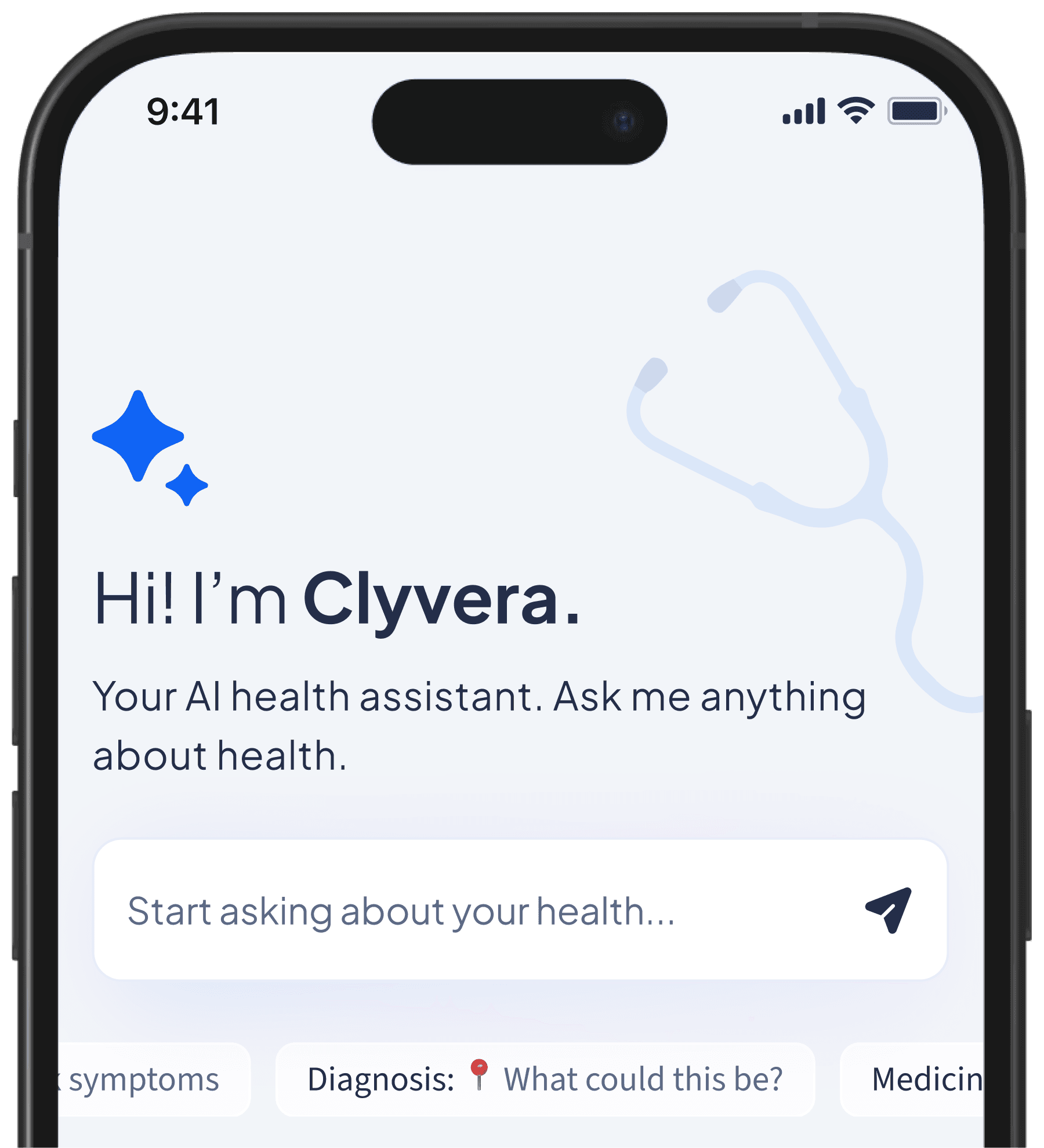
This is where looking at health as a pattern rather than a collection of isolated symptoms becomes useful. Clyvera helps you capture what you're experiencing alongside relevant context, so you can better understand your symptom patterns and make more informed decisions about when professional medical advice may be appropriate.
The goal isn't to make you worry about every heartbeat you notice. It's to help you recognise when something has a straightforward context and when your body is giving you a pattern worth paying attention to.
Related Blogs