How AI symptom checkers work: can they replace a doctor?
AI is transforming almost every industry, and healthcare is no exception. With rapid advancements, people are extremely using symptom checkers to understand their health within seconds. Thanks to easy access to the internet and technology, basic health guidance is now just a few clicks away.
However, this growing dependence raises an important question: can these AI symptom checkers or virtual assistants be accurate enough? Can these tools replace doctor's guidance (atleast at an early stage)?
This article explores how symptom checkers work, where they help, where they fall short, and whether they are replacing doctors!
Let's cut to the chase and check how these virtual health assistants work.
How AI symptom checkers work (what happens behind the algorithm)
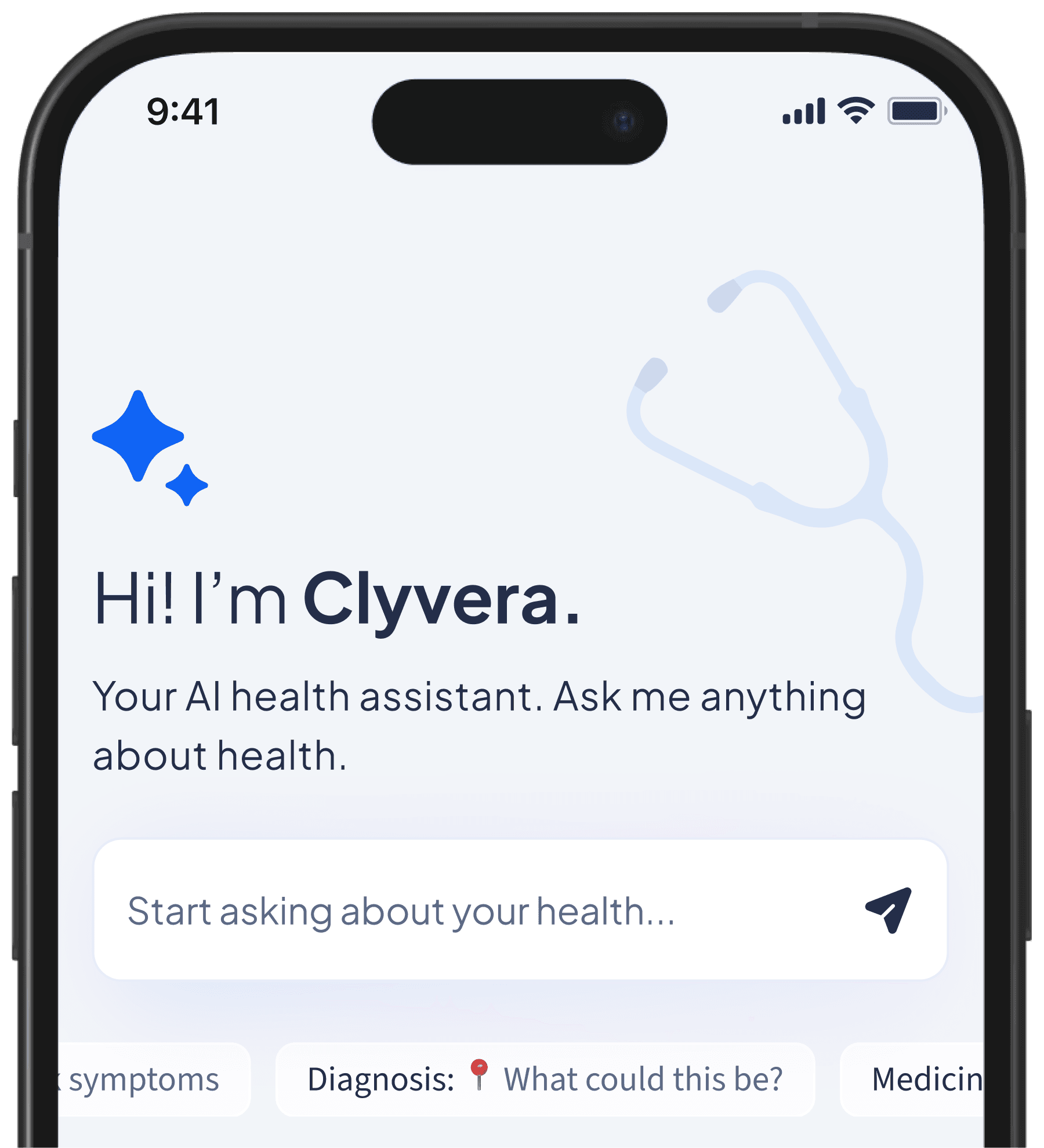
AI symptom checkers are trained on large amounts of medical data and real patient cases. They use technology like Natural Language Processing (NLP) to understand the symptoms you describe, even in simple, everyday language, such as why I am getting a headache while coughing!
Once you enter your symptoms, the tool asks series of questions to get a clearer picture. After collecting this information, machine learning algorithms analyze your inputs and compare them with known medical patterns.
Based on this, the system provides a list of possible conditions and suggests the next steps. These possible conditions are usually ranked by how serious or urgent they might be. The speed at which responses are given is a key advantage, producing answers in seconds.
But other than speed, how reliable are AI symptom checkers compared to consulting a doctor?
Let’s look at both sides i.e. positives and negatives.
Benefits of using AI symptom checkers other than getting a quick response
Saves time and effort- No need to wait for appointments for small doubts atleast for early symptoms.
Cost-effective- Reduces unnecessary doctor visits, saving consultation costs for minor issues.
Available anytime- Late night or busy day, you still have access to basic health guidance.
Good for initial direction- Helps you decide whether to ignore, monitor, or consult a doctor.
Where AI symptom checkers fall short
Limited knowledge- AI is only as good as the data it’s trained on. It doesn’t match a doctor’s full expertise.
Can’t handle complex cases- Diagnosis often depends on genetics, lifestyle, and medical history. These things AI may not fully process.
May miss critical details- Incomplete inputs can lead to incomplete or incorrect suggestions.
No clinical validation- No physical exam or tests to confirm the health condition. Although medical reports can be uploaded, AI may struggle to interpret multiple or varying reports accurately in context.
Legal concerns- Patient data and medical advice come with strict regulations. If AI provides incorrect guidance it can raise serious legal and compliance risks.
Why human doctors still lead in diagnosis
Diagnosing a health condition isn’t just about matching symptoms. It’s about understanding the full story behind them. Human doctors combine medical knowledge with experience, observation, and patient interaction to make informed decisions
Understand beyond symptoms- They don’t just rely on what you say. They observe, question, and pick up subtle signs. Experience shapes better judgment
Empathy as a core strength- They understand your concerns, fears, and emotions, offering reassurance and building trust alongside treatment.
Best for complex situations- They can connect multiple factors like history, lifestyle, and other conditions.
Physical examination adds clarity- Real-time checks help identify issues that tools or reports may miss.
Can handle uncertainty- When symptoms don’t clearly match a condition, doctors can dig deeper and adapt.
Context-driven decisions- Treatment is based on your overall health, not just isolated symptoms
Where challenges exists
Human error is possible- Fatigue, bias, or incomplete information can sometimes affect diagnosis.
Not always instantly accessible- Instant availability, appointments, and wait times can delay care.
Time limitations- Busy schedules may lead to shorter consultations.
Access and cost challenges- Not everyone can easily reach or afford timely medical care.
Now that we have witnessed the benefits and challenges of both. Let’s check when you should go for a symptom checker and when a doctor visit is necessary.
When to use an AI symptom checker
AI symptom checkers are widely used today. Platforms like WebMD have reported around 4 million users per month, showing how people are increasingly turning to online tools for quick health answers, as noted in the Journal of Medical Internet Research.
These checkers should be used as a first step, especially when you are trying to understand mild symptoms. They are particularly useful for common, non-serious conditions. This makes them helpful especially when immediate access to a doctor is not possible.
In simple terms, AI works well when you need quick guidance not a final diagnosis.
When you should see a doctor instead
When symptoms are serious, unclear, or persistent. Medical diagnosis often involves deeper factors like history, lifestyle, and physical examination, things AI cannot fully assess.
Another concern is over-reliance. People may panic when serious conditions appear in online results, leading to “Google panic.” Research also shows that users can overtrust AI-generated advice, even when it is inaccurate, which may delay proper care.
If symptoms worsen, don’t improve, or feel unusual, always seek medical attention. AI can guide and support you, but it cannot replace a doctor. Only a medical professional can provide an accurate diagnosis and safe treatment.
It’s not a choice between humans and technology
Healthcare doesn’t have to choose between humans and technology. The real potential lies in combining both. When human judgment and experience come together with the speed and scale of AI. This shift is already happening, it just needs to be fully embraced.
Medical staff spend a large part of their day handling routine tasks. At the same time, there are critical responsibilities involving decision-making, patient interaction, and complex diagnosis that technology simply cannot replace. While humans bring context and understanding, AI can quickly process vast amounts of data, making everyday work more efficient.
As per PubMed Central, in the United States, physicians spend 34% to 55% of their working hours on creating electronic medical records (EMRs), leading to an estimated $90 billion to $140 billion annual cost. But with the help of AI, this burden is starting to reduce. Studies show that documentation time can decrease by approximately 40%, while voice-based AI tools have reduced per-patient documentation time by 28.8% and after-hours work by 11.8%.
These improvements highlight a simple reality. AI handles the repetitive work, while doctors focus on patient care.
Conclusion
The doctor of the future has a powerful assistant and so do you. Symptom checkers are reshaping how people engage with their health, making awareness faster and smarter. This is the era of collaborative intelligence, where technology and human expertise don't compete, they complement. Clyvera is built for exactly this! Helping you decode symptoms confidently before your next consultation. Doctors won't disappear; they'll just have better-informed patients sitting across from them.
Related Blogs