Your hairbrush is suddenly fuller than usual. Should you be concerned?

You wash your hair and notice more strands around the drain than usual. A few days later, your hairbrush looks fuller too. Maybe your ponytail feels slightly thinner, or you're starting to notice more of your scalp in the mirror.
Hair naturally falls out every day as part of its growth cycle, so seeing strands on your pillow, brush or shower floor doesn't automatically mean you're experiencing abnormal hair loss. What matters more is whether there has been a noticeable change from what's normal for you.
And sometimes the most useful clue isn't your hair at all. It's what happened to your body weeks or even months earlier.
First, hair loss doesn't always happen immediately
One reason hair loss can be difficult to understand is the delay between a trigger and the shedding you eventually notice.
A type of temporary hair shedding called telogen effluvium can occur after significant physical or emotional stress. According to the American Academy of Dermatology (AAD), people may experience excessive shedding after events such as significant weight loss, childbirth, illness with a high fever, surgery or periods of considerable stress.
The increased shedding may become noticeable months after the event.
That means when you ask, “What changed this week?”, the better question may sometimes be, “What happened a few months ago?”
Perhaps you had a significant illness, underwent surgery, went through a particularly stressful period or made a major change to your diet. That timeline can provide useful context.
Could stress really make your hair fall out?
Stress gets blamed for almost everything, but in the case of hair shedding, there can be a genuine connection.
Significant or prolonged stress can disrupt the normal hair-growth cycle and contribute to increased shedding. The frustrating part is that your stress levels may have improved by the time the hair loss becomes noticeable.
Stress isn't the only possible explanation, though. If shedding persists, becomes severe or doesn't fit with any obvious recent event, other factors may need to be considered.
What if you're also feeling tired?
Hair loss accompanied by other symptoms can tell a different story from hair loss alone.
Iron deficiency, for example, can be associated with hair loss. If you've also been experiencing unusual tiredness, shortness of breath, noticeable heartbeats or paler skin, it's worth mentioning the combination to a healthcare professional.
The NHS lists tiredness, shortness of breath, heart palpitations and paler skin among common symptoms of iron-deficiency anaemia, with hair loss among less common symptoms.
This doesn't mean hair loss proves you're iron deficient, and taking iron supplements without knowing whether you need them isn't a good solution. A healthcare professional can determine whether testing is appropriate.
Your thyroid can affect your hair too
Thyroid hormones influence many processes throughout the body, so thyroid problems don't necessarily appear as one obvious symptom.
Both an underactive and overactive thyroid can be associated with hair changes.
With an underactive thyroid (hypothyroidism), hair loss may appear alongside fatigue, feeling unusually cold, weight gain, constipation, dry skin or difficulty concentrating. The NHS overview of hypothyroidism provides a broader list of symptoms.
An overactive thyroid (hyperthyroidism) can produce a different pattern, potentially involving weight loss despite increased appetite, heat sensitivity, sweating, trembling, anxiety or a fast heartbeat. You can read more through the NHS guide to hyperthyroidism.
Again, hair loss alone can't tell you whether your thyroid is involved. It's the combination of changes that makes the possibility more relevant.
Sometimes the pattern of hair loss is the clue
Not all hair loss looks the same. Some people notice general thinning or increased shedding across the scalp. Others notice a gradually receding hairline or thinning around the crown. Some develop clearly defined patches where hair disappears.
For example, alopecia areata is a condition that can cause sudden hair loss, often beginning with round or oval bald patches. The American Academy of Dermatology explains that it can affect the scalp and other areas of the body.
Gradual pattern hair loss, meanwhile, can have a strong genetic component and becomes more common with age.
This is why “I'm losing hair” is only the beginning of the description. Where you're losing it, how quickly it's happening and what the scalp looks like can all matter.
Your hair routine deserves a look as well
Not every cause comes from inside the body. Repeatedly pulling the hair tightly into styles such as tight ponytails, buns, braids or extensions can place stress on the hair follicles. Over time, this can contribute to traction alopecia.
Chemical treatments and excessive heat can also damage the hair itself, creating breakage that may look like hair loss.
If you've recently changed hairstyles, increased heat styling, bleached your hair or started another intensive treatment, consider whether what you're seeing is shedding from the root, hair breakage, or a combination of both.
What should you pay attention to?
Rather than counting individual strands every morning, look for meaningful changes. Has the amount of shedding clearly increased? Is your hair becoming thinner all over or only in one area? Are there distinct bald patches? Is your scalp itchy, painful, red or scaly? Did you experience a major illness, stressful event, pregnancy, surgery or significant weight change several months earlier?
Then consider what else has changed in your body. Fatigue, unexplained weight changes, feeling unusually hot or cold, changes in menstruation or other new symptoms can provide additional context.
A few photographs taken under similar lighting every few weeks may also give you a more objective view than repeatedly checking the mirror throughout the day.
When should hair loss be checked?
Consider speaking with a healthcare professional or dermatologist if your hair loss is sudden, patchy, persistent, rapidly worsening or causing significant concern.
Medical assessment is also sensible when hair loss occurs alongside other unexplained symptoms, or when your scalp is painful, inflamed, scaly or otherwise noticeably different.
A healthcare professional may examine the pattern of hair loss, ask about recent illnesses, stress, diet, medications and family history, and decide whether tests are needed.
Try not to respond to unexplained hair loss by immediately buying multiple supplements or treatments. Different causes require different approaches, and a product that helps one type of hair loss may do little for another.
The Look beyond the hairbrush
Finding more hair than usual in your brush can be unsettling, but one bad hair-wash day doesn't necessarily indicate a health problem. The more important signal is a clear and persistent change from your usual pattern.
If shedding has increased, think beyond what happened yesterday. Consider recent illness, prolonged stress, nutrition, hormonal or thyroid-related symptoms, medications and changes to how you treat or style your hair.
Your hair may be where you first notice the change, but sometimes the explanation is part of a much bigger picture.
Connecting the changes you notice
Health changes rarely arrive neatly labelled. You may notice hair shedding first and only later realise you've also been unusually tired, feeling colder than normal or recovering from a stressful period several months earlier.
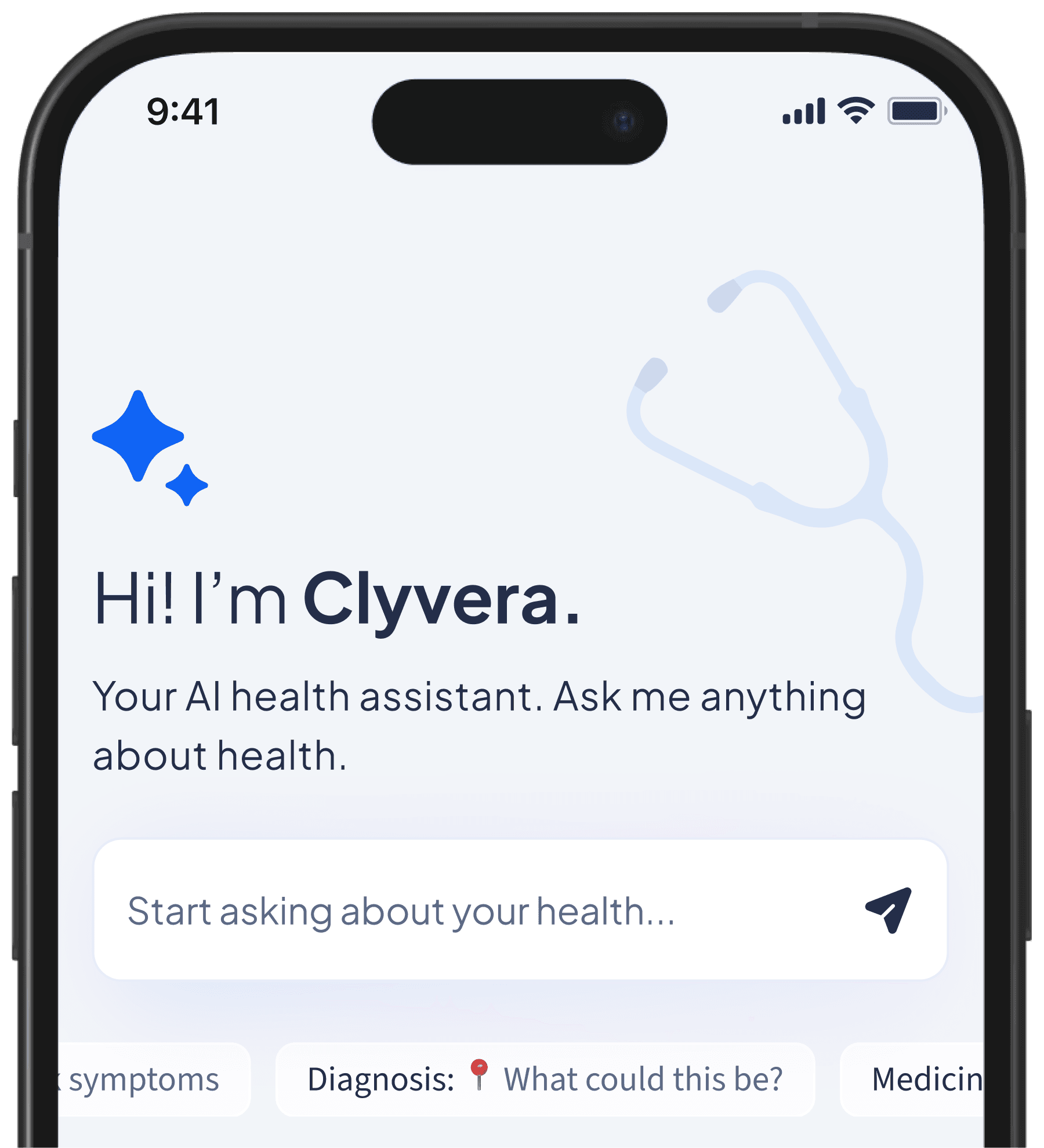
Clyvera helps you bring symptoms and relevant health context together so you can better understand patterns in what you're experiencing and recognise when professional medical advice may be appropriate.
The aim isn't to diagnose the cause of hair loss from a list of symptoms. It's to help you see the connections that may otherwise be easy to miss.
Related Blogs