Waking up at 3 AM every night? What repeated night-time waking can tell you about your health

You glance at the clock and somehow, once again, it's around 3 a.m. You went to bed tired. Falling asleep wasn't particularly difficult.
Yet several hours later you're wide awake, perhaps checking your phone, turning over repeatedly or wondering why your body seems determined to interrupt a perfectly good night's sleep.
Waking briefly during the night isn't automatically a problem. Sleep naturally moves through different stages, and brief awakenings can happen without you even remembering them the next morning. The more useful question is what happens when those awakenings become frequent, prolonged or disruptive enough to affect how you feel the following day.
And despite what you may have seen online, waking at exactly 3 a.m. doesn't necessarily carry a special medical meaning. What matters more is why you woke up, how often it happens and what other symptoms come with it.
Start with the simplest clue: what woke you?
If you keep waking during the night, think about the first thing you notice when your eyes open.
Is your mind already racing? Do you need to use the bathroom? Are you sweating or feeling unusually hot? Do you notice heartburn, coughing or discomfort? Did you wake because your partner said you were snoring?
Sometimes the reason is obvious. At other times, the clue is something you only notice after looking at several nights together. Let's follow a few of the most common possibilities.
You wake up and your brain immediately switches on
For some people, the body wakes first and the mind follows. For others, it feels as though their thoughts never really switched off.
You open your eyes and within seconds you're thinking about tomorrow's meeting, an unfinished project, finances, family responsibilities or something that happened earlier in the day. The more you try to force yourself back to sleep, the more awake you become.
Stress and anxiety can interfere with sleep in different ways. They may make falling asleep difficult, but they can also contribute to waking during the night and struggling to return to sleep.
When difficulty staying asleep happens repeatedly and begins affecting daytime functioning, it can be associated with insomnia. The National Heart, Lung, and Blood Institute (NHLBI) explains that insomnia can involve trouble falling asleep, staying asleep or getting good-quality sleep.
The important clue here is not necessarily the time on the clock. It's the repeated combination of waking + mental alertness + difficulty returning to sleep.
You wake because you need the bathroom
Getting up once during the night to urinate isn't unusual, particularly as people get older or after drinking a lot of fluid close to bedtime. But if bathroom trips are repeatedly breaking your sleep, it's worth looking at the pattern.
Night-time urination is known as nocturia. It can have relatively simple explanations, such as drinking large amounts of fluid in the evening, particularly beverages containing caffeine or alcohol.
In other cases, frequent night-time urination can be associated with medications or health conditions.
The Cleveland Clinic's overview of nocturia discusses factors ranging from fluid intake and sleep disorders to conditions affecting the bladder and other body systems.
What matters is whether this is normal for you. If you've suddenly gone from sleeping through the night to getting up several times, particularly alongside symptoms such as increased thirst, painful urination or daytime urinary changes, mention it to a healthcare professional.
You wake feeling hot or sweaty
If you repeatedly wake up overheated, sweating or throwing the covers off, the temperature of your bedroom is an obvious place to start.
But for some people, particularly women approaching or going through menopause, night-time awakenings can be related to hot flushes and night sweats.
Hormonal changes during menopause can significantly affect sleep. The NHS lists difficulty sleeping among common menopause and perimenopause symptoms, often related to night sweats and other physical changes. Again, context makes the symptom more meaningful. Waking because your bedroom is too warm isn't the same as repeatedly waking drenched in sweat despite a comfortable sleeping environment.
Persistent or unexplained night sweats should be discussed with a healthcare professional, particularly when they occur alongside other unexplained symptoms.
You wake with burning in your chest or throat
Dinner was late. Perhaps it was particularly rich or spicy. You went to bed soon afterwards and a few hours later you're awake with an uncomfortable burning sensation in your chest or a sour taste in your mouth.
Acid reflux can become more noticeable when you're lying down because stomach contents can travel back toward the oesophagus more easily. The NIDDK's information on GERD explains that gastroesophageal reflux can cause heartburn and regurgitation, while some people may experience additional symptoms such as chronic cough or hoarseness.
If your awakenings tend to happen after late meals and coincide with reflux symptoms, the relationship may be worth noting.
Repeated reflux, difficulty swallowing, persistent vomiting or other significant symptoms should be medically assessed rather than managed indefinitely through self-treatment.
You wake suddenly, but don't know why
This scenario can be harder to recognise because you may not know what happened while you were asleep. Perhaps you wake suddenly with a dry mouth. Maybe your partner says you snore loudly, gasp or seem to stop breathing briefly. Despite spending enough hours in bed, you wake in the morning feeling unrefreshed and struggle with daytime sleepiness.
These can be features associated with obstructive sleep apnea, a condition in which breathing repeatedly stops and starts during sleep.
According to the NHLBI, symptoms can include loud snoring, breathing that starts and stops, gasping for air, daytime sleepiness, dry mouth and headaches.
Clyvera has covered sleep apnea separately in more detail, but it's worth mentioning here because repeated night-time waking may sometimes be part of a broader sleep problem rather than simply “bad sleep.”
Snoring alone doesn't prove someone has sleep apnea. However, repeated breathing pauses, gasping or significant daytime sleepiness warrant discussion with a healthcare professional.
You wake after alcohol helped you fall asleep
Alcohol can create a slightly misleading relationship with sleep.
It may initially make you feel sleepy and help you fall asleep faster, which can make it seem like a useful sleep aid. But alcohol can disrupt sleep later in the night and contribute to poorer-quality or more fragmented sleep.
This can create a familiar pattern: you fall asleep quickly after drinking in the evening but wake several hours later and struggle to return to sleep. Alcohol may also worsen snoring and sleep-disordered breathing in some people.
If your night-time waking seems more common after evenings when you've been drinking, that's a useful pattern to notice rather than simply assuming you're experiencing unexplained insomnia.
Your afternoon habits may be following you into the night
Not every sleep problem begins at bedtime.
Caffeine can remain in your system for hours, and sensitivity varies considerably between people. An afternoon coffee that has little effect on one person's sleep may interfere significantly with another's.
Screen habits, inconsistent sleep schedules, long daytime naps and insufficient physical activity can also influence sleep.
The CDC's guidance on healthy sleep habits recommends maintaining a consistent sleep schedule, keeping the bedroom quiet and relaxing, avoiding large meals and alcohol before bedtime, and avoiding caffeine in the afternoon or evening.
Rather than changing everything at once, observe whether a particular behaviour consistently appears on nights when your sleep is worse.
Is waking at 3 a.m. itself meaningful?
This deserves clarification because there are countless explanations online claiming that waking at a particular hour reveals a specific problem with an organ, hormone or emotional state.
From a medical perspective, the exact clock time alone usually isn't enough to identify a cause.
If you go to bed at roughly the same time every night, you naturally progress through sleep cycles on a relatively consistent schedule. Environmental factors, stress, habits and health conditions can then make you more likely to become fully awake during certain parts of the night. Instead of focusing on 3:00 a.m. itself, ask what happens around the awakening.
Do you need to urinate? Are you hot? Is your mind racing? Are you coughing? Do you feel short of breath? Did you drink alcohol? Does it happen on work nights but rarely on weekends?
Those details tell a much richer story than the clock.
The morning after can provide another clue
How you feel the next day matters too. If you wake once, return to sleep quickly and feel rested in the morning, the awakening may have little practical significance.
If you're awake for an hour every night, struggle to concentrate the following day, rely heavily on caffeine, feel irritable or find yourself fighting sleep during meetings or while driving, the sleep disruption is having a meaningful effect.
Keeping a simple sleep diary for a week or two can help reveal patterns. Record approximately when you went to bed, when you woke during the night, what seemed to wake you, how long you remained awake and how you felt the next day. You might also note caffeine, alcohol, exercise, stress and unusual symptoms.
The purpose isn't to create perfect sleep data. It's to replace “I sleep badly” with a clearer picture of what's actually happening.
When should repeated night-time waking be checked?
Consider speaking with a healthcare professional if difficulty staying asleep has become persistent, is significantly affecting your daytime functioning or continues despite improving obvious sleep habits.
Medical advice is also appropriate when awakenings are associated with symptoms such as frequent gasping or breathing pauses, significant daytime sleepiness, persistent night sweats, repeated night-time urination, ongoing reflux symptoms, significant pain or unexplained changes elsewhere in your health.
Sleep problems can sometimes be secondary to another condition, so repeatedly treating the waking itself without understanding the reason may not solve the underlying issue.
If you become so sleepy during the day that activities such as driving feel unsafe, take that seriously and seek appropriate medical guidance.
Conclusion: Don't obsess over 3 a.m. Look at the pattern around it
Waking during the night isn't automatically evidence that something is wrong. What matters is whether it has become a recurring pattern, what seems to trigger the awakening and whether your sleep is still allowing you to function normally the following day.
The clock can tell you when you woke up, but it rarely tells you why. Stress, bathroom trips, hormonal changes, reflux, alcohol, caffeine, sleep disorders and your everyday routines can all influence how well you stay asleep.
So if you find yourself staring at 3:07 a.m. on your phone again tomorrow night, don't focus only on the number. Pay attention to what woke you, what happened before bed and how you feel the next morning. Those details are often far more useful.
Understanding your health starts with connecting the dots
Sleep doesn't exist separately from the rest of your health. A night of poor sleep may connect with stress, medications, digestive symptoms, breathing problems, hormonal changes or something else you've been experiencing.
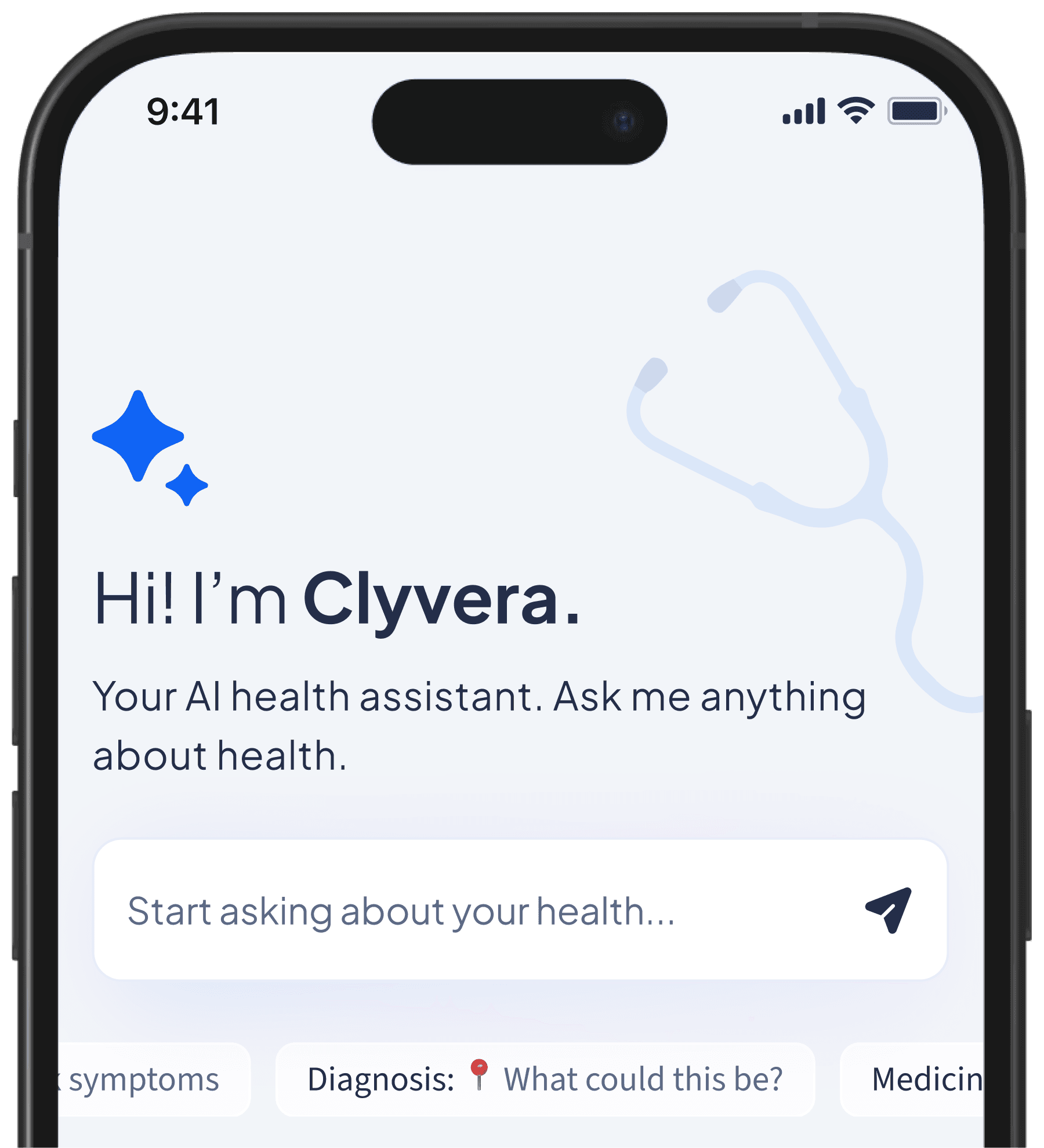
Clyvera helps you bring symptoms and relevant health context together so you can better understand patterns over time and recognise when professional medical advice may be appropriate.
Rather than searching every symptom separately, the aim is to build a clearer picture of what's changing and what those changes may mean together.
Related Blogs