Could your daytime fatigue have a hidden cause? Understanding sleep apnea

Feeling tired during the day is a common experience for humans. In most cases, it is nothing to worry about!
It usually means that the body needs rest, which can be due to many reasons:
insufficient previous sleep, stress, lack of or excess iron, and more. However, if daytime tiredness is frequent and/or accompanied by other symptoms, such as heavy snoring, morning headaches, waking up with a dry mouth, or someone informing you that you have held your breath while sleeping - it may be a symptom of sleep apnea.
This article aims to provide information about the signs of sleep apnea that may occur alongside daytime drowsiness. It is not intended to allow self-diagnosis, as only a doctor can determine the causes of your tiredness - but it can surely help understand when it is right time to pay attention to your health.
What is sleep apnea?
Sleep apnea is really about interrupted breathing during sleep not once, but over and over, sometimes without the sleeper ever realizing it happened. In its most common form, obstructive sleep apnea (OSA), the throat muscles loosen past the point of holding the airway open, and breathing briefly collapses. Each of these pauses can run anywhere from a few seconds to well over a minute, and on a bad night, they can repeat hundreds of times.
The body doesn't get much say in the matter, it reacts to the drop in oxygen by jolting the sleeper just enough to reopen the airway, usually without any memory of it happening. Multiply that by a full night, and deep, restorative sleep barely gets a chance to happen. That's the mechanism behind the exhaustion so many people with untreated OSA describe, even after what looks, on paper, like a full eight hours.
It's also more common than the silence around it suggests. According to the National Institutes of Health (NIH), disease prevalence estimates for obstructive sleep apnea in adults range from 3% to 7%, with certain subgroups facing considerably higher risk, a reminder that this isn't a rare or fringe condition.
Symptoms that may occur alongside daytime fatigue
Daytime drowsiness is a prevalent symptom of sleep apnea, but it is not specific to the condition, as it can be caused by numerous other factors - most commonly, by insufficient sleep due to poor nighttime sleep quality or quantity.
However, if you experience extreme daytime sleepiness, it is worth investigating further - especially if you also experience some of the other sleep apnea symptoms that often occur alongside it.
Some of the most common ones include:
Heavy or frequent snoring;
Temporary cessations of breathing during sleep, often followed by choking or gasping for air;
Morning headaches, caused by dips in oxygen levels overnight
Difficulty concentrating, short-term memory loss, or impaired cognitive function;
Irritability or changes in mood, unrelated to one’s general mental state;
Increased urge to urinate at night (nocturia);
Unrestful, fragmented nighttime sleep;
High blood pressure that's hard to control with standard treatment
Research also shows just how common one of these signs really is: according to Sleep Medicine Statistics and Facts (2026), snoring is present in up to 94% of sleep apnea cases, making it one of the strongest early clues to watch for.
If you notice excessive daytime sleepiness paired with two or three of these symptoms, it's a stronger signal worth paying attention to rather than tiredness alone.
Who is more likely to develop sleep apnea?
Certain factors raise the risk of sleep apnea, including:
Being male (though risk in women rises notably after menopause)
Excess body weight or obesity, which increases fat deposits around the upper airway
Older age, especially over 50
A family history of sleep apnea
A naturally narrow airway, large tonsils, or certain craniofacial features
Smoking and regular alcohol or sedative use
Chronic nasal congestion
All these increases the vulnerability to obstructive sleep apnea. Knowing whether you fall into one or more of these risk factor groups can help you judge how seriously to take your symptoms.
When should you consider speaking to a healthcare professional?
You should reach out to a doctor if you notice:
Daytime fatigue that doesn't improve even after a full night's sleep
Loud snoring combined with witnessed breathing pauses
Morning headaches occurring several times a week
Falling asleep involuntarily during the day (driving, meetings)
High blood pressure that's difficult to manage
A partner expressing concern about your breathing at night
Sleep apnea is a manageable condition once diagnosed, but it requires a proper sleep evaluation. Recognizing these signs early is the easy part, the harder part is knowing how to act on them, which is where a symptom checker can help.
Can a symptom checker help identify possible sleep apnea?
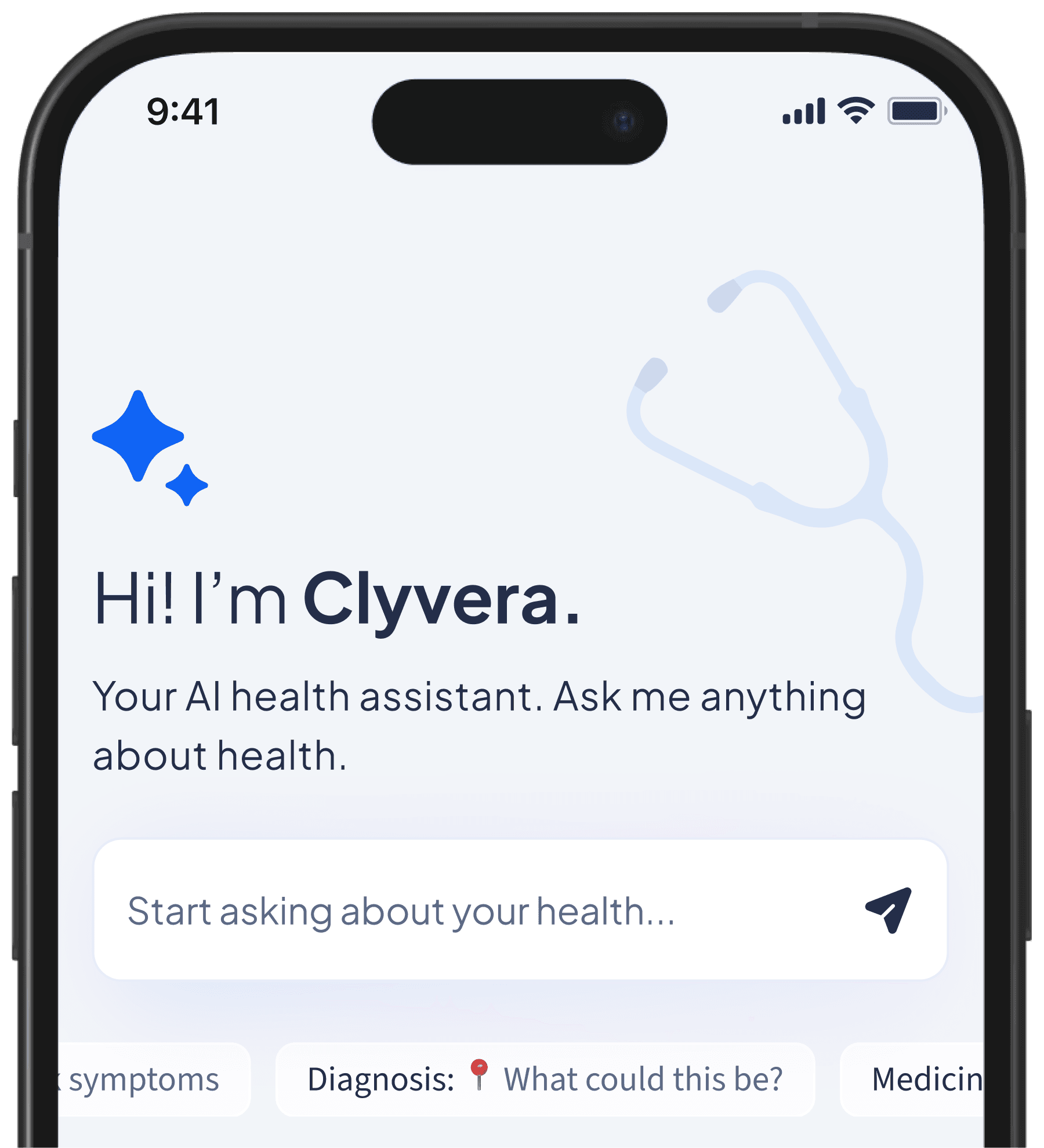
A symptom checker like Clyvera can be a genuinely useful first step when you're trying to make sense of scattered symptoms including fatigue, snoring, headaches, poor concentration that don't seem connected at first glance.
Here's where Clyvera adds real value:
It helps you organize your symptoms into a clear pattern instead of guessing in isolation
It offers educational context on conditions commonly associated with your symptom combination, including sleep-related issues
It helps you decide whether and how quickly to consult a doctor, instead of relying on random online information.
It supports better, more informed conversations with your doctor, since you'll arrive with a clearer picture of what you've been experiencing and when
It's important to be clear: Clyvera is not a diagnostic tool, and it cannot confirm sleep apnea. Only a sleep study(Polysomnography) can confirm if you have sleep apnea. But as a starting point for understanding your symptoms and knowing when to act, a symptom checker can save you time, worry, and unnecessary guesswork.
Conclusion
Daytime fatigue is common, and it doesn't automatically mean something is seriously wrong. But when it travels together with related symptoms, it's a combination worth taking seriously. Understanding these sleep apnea symptoms and using tools like Clyvera to help organize and make sense of them can be the first step toward getting the right diagnosis and, ultimately, better sleep and better health.
FAQs
Can sleep apnea go away?
In some cases, yes, because there are many potential causes for sleep apnea, including obesity, alcohol, and positional sleep apnea; thus, treating or eliminating these conditions can successfully cure sleep apnea in many cases. However, for many people, sleep apnea tends to be a chronic disease that requires long-term management with CPAP therapy or other therapies.
What causes sleep apnea to occur all of a sudden?
Sleep apnea rarely occurs suddenly, it usually evolves over time as a result of various predisposing factors, such as weight gain, aging, menopause, alcohol use, or nasal obstruction. One’s own sleep apnea may feel like it appeared suddenly because it was not noticeable before. Sometimes it's only sudden in the sense that it becomes noticeable once a partner points out snoring or breathing pauses that were already happening.
What happens if sleep apnea is untreated?
Untreated sleep apnea has been linked to serious long-term health risks, including high blood pressure, heart disease, stroke, type 2 diabetes, and abnormal glucose metabolism.
How do I check myself for sleep apnea?
Although self-diagnosis is not possible, a person can identify warning signs and symptoms of sleep apnea. The main signs of sleep apnea include loud snoring, choking during sleep, daytime drowsiness or impaired attention, morning headaches, waking up with a dry mouth, and choking during the night. To identify sleep apnea, one should look for these signs and symptoms and analyze them using an online sleep apnea checker. However, a formal diagnosis should be made during a sleep study.
Who is most prone to sleep apnea?
People who are male, over 50, overweight or obese, have a family history of the condition, smoke, drink alcohol regularly, or have structural airway differences are generally at higher risk. Women become notably more susceptible after menopause.
What not to do with sleep apnea?
Avoid alcohol and sedatives close to bedtime, since they relax throat muscles further and worsen airway blockage. Don't ignore persistent snoring or fatigue by assuming it's "just stress." Avoid skipping prescribed treatments like CPAP therapy once diagnosed, and don't rely solely on sleeping position changes or lifestyle tweaks if a professional has recommended formal treatment.
Related Blogs