When AI gets it wrong: The hidden biases shaping medical decisions
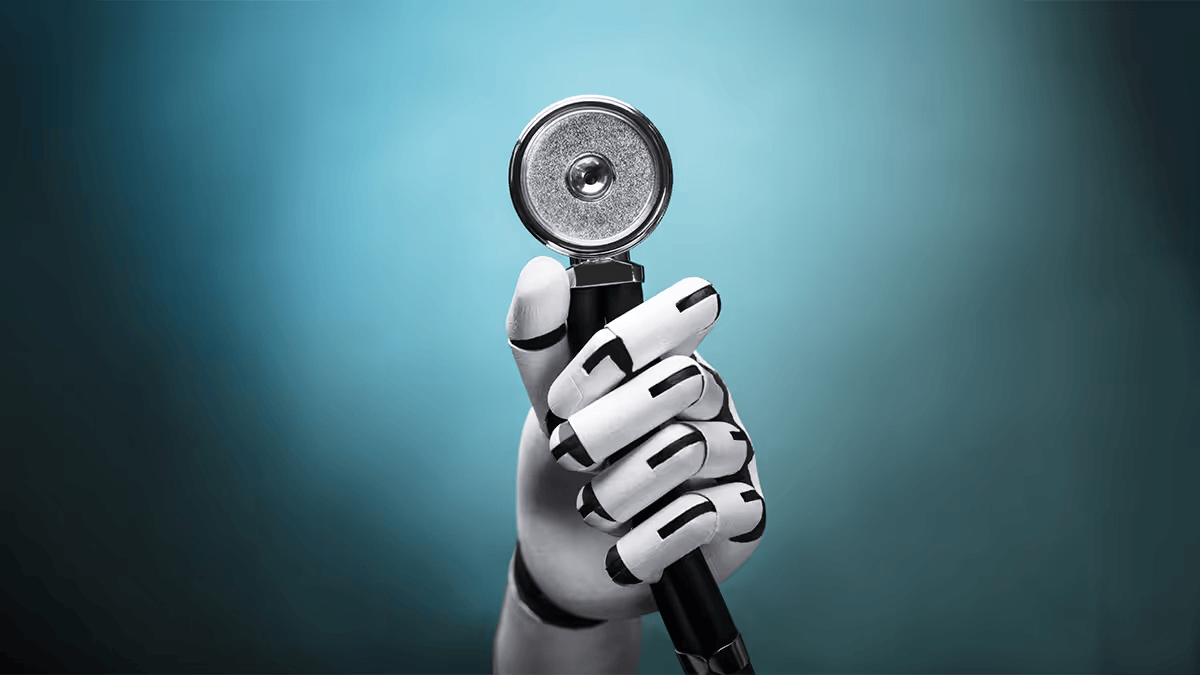
Artificial intelligence is quietly becoming a fixture in hospitals and clinics by flagging diseases early and predicting who's at risk. It sounds like a win for both patients and doctors. But here's the uncomfortable truth: medical AI can be just as biased as the humans who built it, sometimes even more so. When a biased algorithm influences a clinical decision, real patients bear the consequences.
In this blog, we will discover prominent causes of bias in AI and how to tackle them. Let’s dig straight into it.
Causes of bias In healthcare AI and solutions
1) It starts with the data
The most straightforward problem is who gets included in training datasets. This occurs when the datasets used to train AI do not reflect the diversity of the real-world population.
For example, research published in PubMed Central highlights a key flaw in AI-based melanoma detection. These models are trained mostly on light-skinned images, so they often miss or misidentify lesions on darker skin.
Even though melanoma is more common in non-Hispanic white populations and may look different on darker skin, that’s not a valid reason to leave these groups out of AI training data.
By excluding a certain set of population, AI is giving rise to healthcare disparities in diagnosis and outcomes. But imbalanced datasets are just the beginning. Patients from lower socioeconomic backgrounds often have incomplete medical records, such as fewer diagnostic tests and care spread across multiple hospitals using different systems. An AI reading an incomplete chart doesn’t know why data is missing such as a patient being unable to afford follow-up care. In such a case, it simply interprets the case as “lower risk.”
This invisible gap quietly skews recommendations against the most vulnerable.
Suggested Solutions-
Apply data augmentation to generate new samples from existing minority data points.
Use statistical imputation to fill data gaps intelligently, based on similar patients.
Strengthen interoperability between hospital record systems so patient histories aren't lost when people switch healthcare providers.
Design clinical interfaces that flag missing data to clinicians during patient encounters
2) When important health factors are missing
Social Determinants of Health have an enormous influence on outcomes, yet most AI tools ignore them simply because the data isn't there.
Here's a simple, real-life, relatable happening: someone in my family has been taking treatment for over a year and a half, but the condition hasn't improved much. As an alternative solution, they recently tried an online AI doctor, which asked for medical reports to analyse better. The AI went through the reports but never thought to ask: Is there stress at home? Poor sleep? Worry about something? These things deeply affect health, yet no report captures them. The AI had data, but not the full picture. And half a picture can lead to the wrong answer.
Suggested Solutions-
Introduce standardized screening questionnaires into clinical workflows to capture social factors systematically.
Use language models to extract relevant information from clinical notes to pull out hidden social signals automatically
3) When algorithms use race as a medical fact
Some clinical tools have literally coded race into their calculations, treating it as a biological variable. Let’s understand this in a better way, with an example- A cardiovascular risk calculator assigned different risk scores based on race. A South Asian patient and a white patient with identical blood pressure, cholesterol, and lifestyle habits could receive different risk scores simply because of their ethnicity. This leads to one getting preventive medication and the other not.
Suggested Solutions-
Reassess and eliminate race from risk calculators wherever evidence is insufficient.
Replace race with socioeconomic factors like income level or neighbourhood conditions. These are the real drivers of health gaps. The American Heart Association's PREVENT model already does this, using a patient's zip code as a measure of social deprivation instead of race.
4) Models trained on one crowd, tested on another
Imagine an AI trained on data from big city hospitals, then deployed in a small town hospital with older patients and different disease patterns. It has never been trained on these patients, so it starts missing real cases and raising false alarms. That gap between who the AI learned from and who it's actually used on is called sample selection bias, and it quietly causes harm long before anyone notices. Doctors also add to the problem by inconsistently following AI advice, trusting it for some patients but overriding it for others.
Suggested Solutions-
Test diverse, real-world populations before going live.
Monitor model performance continuously after launch, especially across demographic subgroups.
5) Labels that carry human bias
When AI learns from human decisions, it also learns the biases within them. Let's check a healthcare example of this-.
Research suggests that, doctors consistently undertreated pain in women compared to men for the same reported symptoms; the AI trains on those decisions and assumes that's the correct pattern. It doesn't question the label. it just learns it and repeats it at scale. Thus, the bias gets amplified across thousands of future patients.
Suggested Solutions-
Get more than one doctor to review and label patient data, so no single bias dominates.
Alongside that, teaching clinicians about unconscious bias directly improves the quality of decisions AI learns from.
Takeaways
AI has the potential to improve accuracy and efficiency, but that promise only holds true when the foundation it’s built on is fair.
Here’s what we at Clyvera had understood-
Even high-performing systems can fail silently when they overlook underrepresented groups
Fixing bias isn’t a one-time correction. It requires continuous monitoring, diverse inputs, better data practices, and accountability at every stage
It requires a commitment to inclusivity from design to deployment.
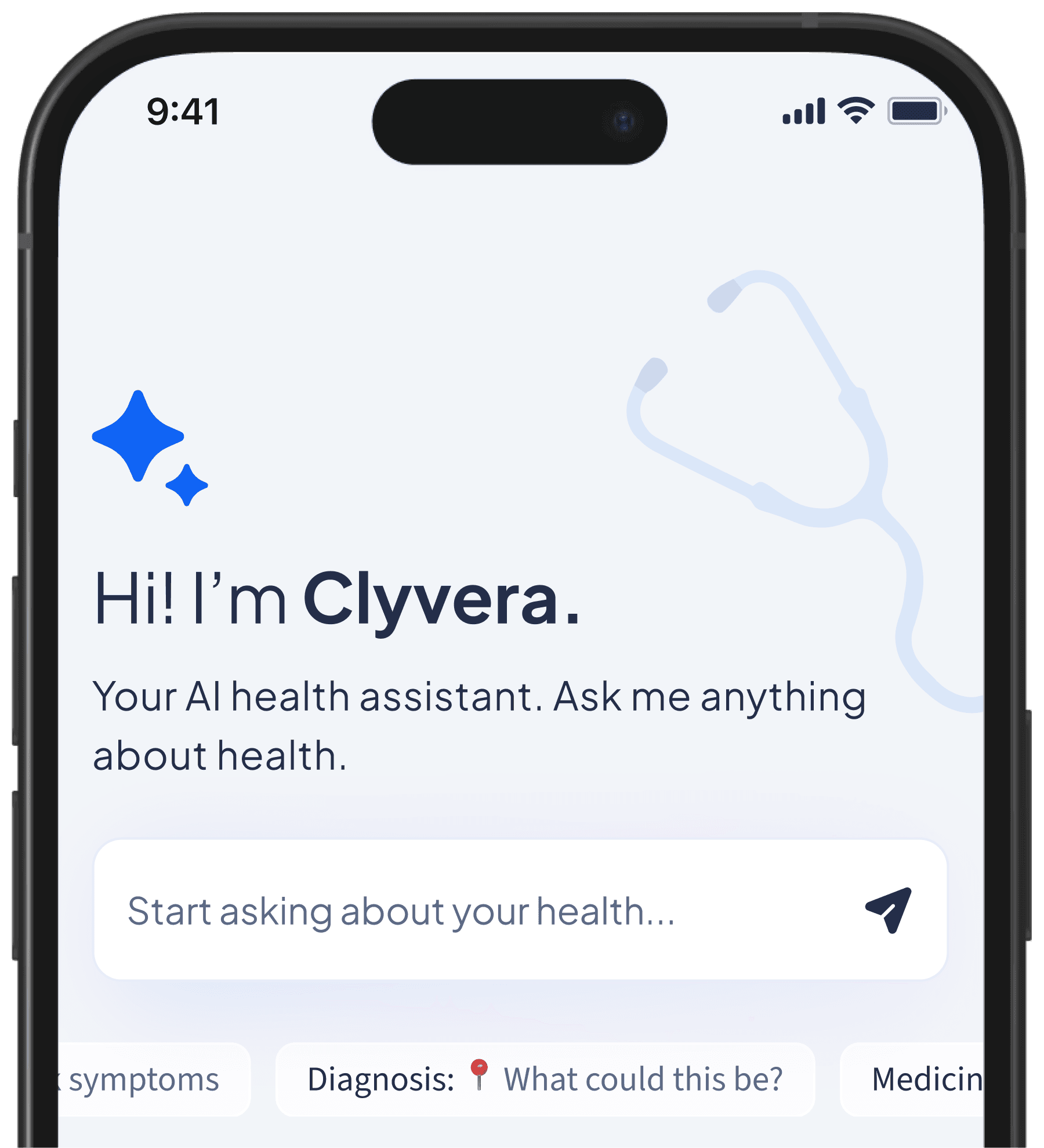
That's what Clyvera is built on. As a symptom checker app, we aim to support decisions with data that reflects diverse and real-world conditions.
Related Blogs