When is a stomach ache more than just a common pain? A simple guide to gut symptoms

You eat something a little off, feel stressed before an exam, or wake up with that uncomfortable heaviness in your belly, and most of the time, it passes on its own. But what about the times it doesn't? What if that abdominal pain is not just yesterday's spicy food?
This guide breaks down when a stomach ache is just a stomach ache and when it's your body trying to tell you something important.
Signs your gut might need medical attention
Your digestive system is constantly working in the background. When something goes wrong, it sends signals through pain, discomfort, or changes in your routine. While many of these are minor, some symptoms should never be ignored.
Here is what to pay close attention to:
Pain that keeps coming back: Recurring abdominal pain for more than two weeks
Blood in stool: Dark, tar-like, or bright red stool is never normal
Unexplained weight loss: Losing weight without trying, alongside gut pain
Persistent nausea or vomiting: Especially without a clear cause
Severe burning sensation: Intense pain below the breastbone or in the upper abdomen
Fever with stomach pain: The combination suggests possible infection or inflammation
Sudden, very severe pain that comes on like a "wave" in the abdomen
Pain starting near the belly button that shifts to the lower right side (possible appendicitis)
Signs of severe dehydration, no urination, dry lips, dizziness, or confusion
Early evaluation of the above-mentioned symptoms can make a real difference in outcomes.
Is it acidity, food poisoning, bloating, or something else?
One of the most common questions people ask is: "How do I know what is actually wrong with me?" The location, timing, and character of your stomach pain can offer real clues. Here is a simple comparison:
Condition | Where it hurts | Key signs | How long it lasts |
Acidity / Acid Reflux | Upper abdomen, chest, throat | Burning after meals, sour taste, burping | Minutes to hours |
Food Poisoning | Cramp-like, all over | Vomiting, diarrhea, fever, and chills( often within hours of eating) | 1–3 days (see a doctor if beyond 3 days) |
Bloating / Gas | The entire abdomen feels full | Tightness, visible swelling, excessive gas | Hours usually resolve |
Gastritis | Upper abdomen just below the breastbone | Burning or gnawing pain, worse on an empty stomach | Days to weeks if untreated |
IBS (Irritable Bowel Syndrome) | Lower abdomen, often cramping | Alternating diarrhea and constipation worsens with stress | Chronic, comes and goes |
Constipation | Lower abdomen, sometimes all over | Fewer than 3 bowel movements per week, hard or lumpy stool | Days, may need treatment |
Appendicitis | Starts near the belly button, moves lower right | Worsening pain, fever, nausea | Emergency, hours matter |
Quick Tip
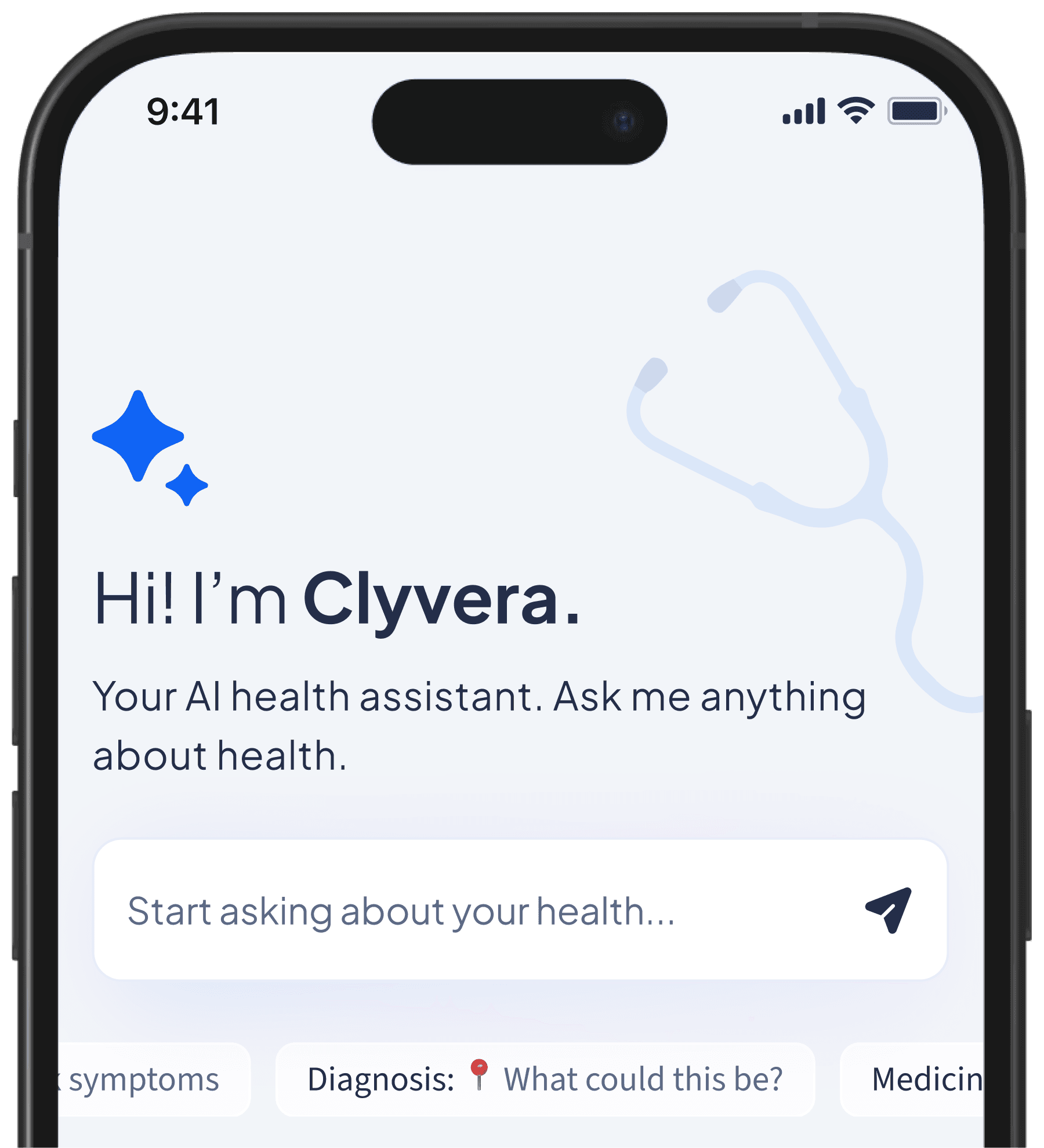
Not sure which one fits your symptoms? Tools like Clyvera Symptom Checker can help you quickly map your symptoms to possible causes, giving you a clearer picture before you decide whether to call your doctor or manage it at home.
Remember, self-diagnosing is tricky. Many gut conditions overlap in how they feel. Abdominal pain location matters, upper vs lower, left vs right, but it should be read alongside all your other symptoms together.
How stress and lifestyle affect your gut health
Here is something most people do not realise: your gut and your brain are in constant conversation. Directly linking your emotions and your digestive system.
The stress–gut connection
When you are stressed, anxious, or overwhelmed, your nervous system shifts into a "fight or flight" mode. Your digestive muscles start behaving differently; they may push waste through too fast (causing loose stools or diarrhoea) or slow everything down (causing constipation and bloating). This is why many people notice their gut acts up before an important meeting, exam, or stressful event.
Chronic stress does not just cause temporary discomfort over time; it can contribute to conditions like IBS, acid reflux, and gastritis. It can also worsen symptoms in people who already have gut conditions.
Lifestyle factors that hurt your digestion
Beyond stress, several everyday habits quietly damage your gut microbiome and digestive health:
Common Gut Disruptors-
Late-night eating puts strain on your digestive system when it should be resting. Irregular meal timings confuse your gut's internal clock.
Excess alcohol irritates the stomach lining and disrupts healthy gut bacteria.
Processed and fried foods delay stomach emptying and trigger acid reflux.
Poor sleep is directly linked to increased gut sensitivity and flare-ups in people with IBS.
A sedentary lifestyle slows down bowel movement and worsens constipation.
The Indian context
In India, spicy food, oily street food, irregular eating hours, and high work-related stress are a perfect storm for gut problems. Add hard water, food hygiene concerns, and the tendency to self-medicate with antacids, and it becomes clear why digestive disorders are among the most common complaints at clinics across the country. If you find yourself reaching for an antacid every single day, that is not normal; it is a signal worth taking seriously.
Simple ways to support better digestion
Good gut health does not require expensive supplements or complicated routines. Small, consistent changes often make the biggest difference.
Stay hydrated throughout the day. Water keeps stools soft and helps food move through your gut at the right pace. Aim for 8–10 glasses a day, and slightly more in summer months.
Eat at regular times. Your gut runs on an internal clock. Eating at predictable intervals helps your digestive enzymes and muscles function optimally and reduces bloating.
Include more fibre in your diet. Foods like dal, vegetables, whole grains, and fruits feed the beneficial bacteria in your gut and keep your bowel movements regular. A healthy gut microbiome is your first line of defence.
Chew slowly and eat mindfully. Digestion starts in your mouth. Eating too fast means swallowing extra air (hello, bloating) and giving your stomach more work to do.
Manage stress actively. This is not optional for good gut health, but it is essential. Even 10 minutes of deep breathing, walking, or yoga daily can meaningfully reduce stress-related gut symptoms.
Limit antacid overuse. Antacids mask symptoms but do not treat the root cause. If you need them more than twice a week, something deeper needs attention.
Add probiotic-rich foods. Curd, buttermilk, and fermented foods support a healthy gut flora that protects against infection and improves digestion naturally.
Final thoughts: Listening to what your gut is telling you
Your digestive system is one of the hardest-working systems in your body. It processes everything you eat, fights off harmful organisms, communicates with your brain, and keeps your immune system alert. When it speaks through pain, discomfort, or unusual symptoms, it deserves your attention.
A stomach ache is not always just a stomach ache. Sometimes it is your gut asking for better food choices, less stress, or more sleep. Sometimes it is flagging a real digestive condition that needs medical care. The difference lies in paying attention to the details: how long the pain lasts, exactly where it sits, what makes it better or worse, and what other symptoms accompany it.
You do not need to figure it all out alone. Use every resource available to you, including smart tools like the Clyvera Symptom Checker, to make more informed decisions about your health because your gut is always talking. The only question is whether you are listening or not.
Related Blogs